






Website Search
Lexington, Kentucky (March 9, 2022) – Lexington Public Library and Lexington Public Library Foundation are honored to announce that the Marksbury Family Foundation has committed the lead gift for the capital campaign to rebuild the library branch at the corner of Versailles Road and Village Drive. In recognition of their generosity, the new facility will be named the Marksbury Family Branch when it opens in 2024.
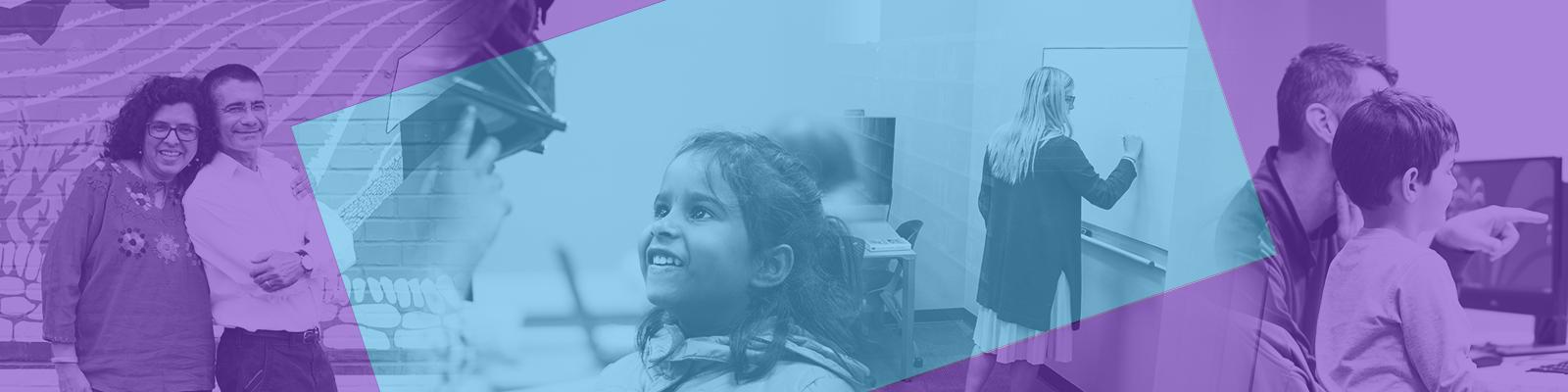
The Kloiber Foundation STEAM Lab, located on the fourth floor of Central Library at 140 East Main Street, is a space for youth and families to explore and create using resources and programs related to Science, Technology, Engineering, Art, and Math (STEAM). Customers ages 7 and under must be accompanied by a responsible caregiver. Planning to bring a group of 10 or more? Please contact us by calling 859-231-5500 ext.1147 or using the link below.
Recurring programs
Lego Club, Maker Station, and Open STEAM Play sessions are available for children and families. The STEAM Lab also hosts weekly drop-in events, Homeschool STEAM activities, and special programming during school breaks. Check out the upcoming events listed below.
All the Library Can Be
The library is essential to a thriving community, ensuring equitable access to information, education, and technology for all. We raise funds to support Lexington Public Library programs, services, and special projects that go beyond what public dollars alone can support.
Your tax-deductible gift to the Lexington Public Library Foundation funds innovation in our public library system. We raise funds to support Lexington Public Library programs, services, and special projects that go beyond what public dollars alone can support, today and for generations to come. The Library Foundation will send you an email confirmation of your gift and a year-end summary and tax acknowledgement receipt.
The 1795 Society is a community of donors whose leadership gifts strengthen Lexington Public Library’s ability to serve, inspire, and connect our neighbors. Named for the year the library was first imagined in Lexington, the society honors those who invest in a legacy of learning, access, and opportunity for generations to come.
Together, we’ll enrich our Lexington Public Library for the next 230 years.
Tracing its history back to 1795, the Lexington Public Library is a gateway to knowledge, a bridge to opportunity, and a hub for community connection. The name of the society honors that legacy — when a small group of citizens came together to create something lasting for their community - a library positioned to evolve to meet the ever changing needs of our community.
Members of the 1795 Society are philanthropic leaders and dedicated library champions. Supporters make a three-year pledge of at least $1,000 per year - whether you are an individual donor interested in making an annual or monthly gift, you are making your estate plans, or you are a corporate partner looking to connect your organization to community impact, we invite you to join this legacy of connection, learning, and leadership in support of the public library!
Join the 1795 Society, a community who enable the Library’s critical work and build a legacy of learning, access and opportunity for generations to come.
Description coming soon.

Kaitlynn Thomas

The Lexington Public Library is home to four collaborative creative spaces for making, learning, exploring, and sharing. These spaces offer a variety of events, high-tech and low-tech equipment for patron use, and serve as a space to build community, explore your creativity, and develop personal interests.
Sample projects
Film a music video, 3D print a fidget toy, digitize old family photos, sew a costume or mend your favorite pair of pants, embroider a t-shirt, comb bind a book, start a podcast, record in the audio booth, create content with the green screen, make custom magnets or buttons, engrave a keychain, print a poster, make custom stickers, and more.
Everyone deserves a place to discover something new. The Lexington Public Library stands for free and open access to information. We’re a safe, welcoming space for neighbors to come together — opening the door so all Lexingtonians can find what they’re looking for.
Find out what's happening at our locations. Browse upcoming events and discover our dedicated learning spaces. Reserve a meeting room. Explore our galleries and special collections.
Lexington, Kentucky (January 17, 2024) – Lexington Public Library is proud to announce the Grand Opening of the Marksbury Family Branch of the Lexington Public Library.
Festivities include a Media Day event on Friday, March 8 from 8:30-10am and a Grand Opening Celebration on Saturday, March 9 (more details coming soon). The current Village Branch will remain open through 6pm on Friday, February 23.
The Undesign the Redline project unearths the deep and systemic history of structural racism and inequality in the United States. This interactive exhibit explores policies like Redlining, their implications for today, and what we can do to undesign them.
The exhibit was created by social impact design studio designing the WE and has been invited to dozens of cities across the country. A local advisory group has helped to produce local history and stories about Redlining in Lexington.
Monday-Thursday: 9:30am-7:00pm
Friday: 9:30am-6:00pm
Saturday: 9:30am-5:00pm
Sunday: 1:00pm-5:00pm
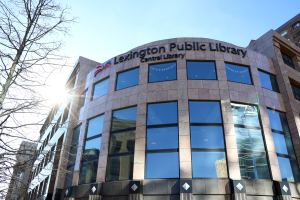
140 East Main Street
Lexington, KY 40507
Read the latest news from Lexington Public Library.
Lexington, Kentucky (August 18, 2022) – The Lexington Public Library broke ground on a new, significantly larger facility in the former Village Branch location on Versailles Road to better provide for the needs of the neighborhoods it serves. The new branch will reflect the community’s vision for a state-of-the-art community hub, one that offers robust resources and a myriad of program and service offerings. The groundbreaking ceremony was held on Tuesday at a media event featuring Library and City officials.
Several pieces of equipment require additional supplies such as PLA filament, vinyl, and metal backings. Some supplies are available for purchase in our learning spaces. Customers ages 13 and up who have signed the Experiential Learning Agreement and Equipment Use Policy, which is available to sign in-person at any of the four learning spaces, and live in Fayette County or a reciprocal county receive an $8 credit each month for material purchases. If you exceed this credit, you can still purchase additional supplies using credit, Mobile App Pay or Mobile Pay, or tapping to pay.
Description coming soon.
All databases are available from this page.
Have a question? Ask us! You can contact us via email, phone, chat, or text. Book a librarian for one-on-one help. Suggest a purchase to help us improve our collection.