






Website Search
All locations will be closed on Monday, September 7, for Labor Day.
All locations will be closed on Monday, January 18, for Martin Luther King, Jr. Day.
All locations will be closed on Saturday, July 4, for Independence Day.
All locations will be closed on Monday, May 31, for Memorial Day.
All locations will be closed on Friday, June 19, for Juneteenth (Freedom Day).
All Lexington Public Library locations are closed on these holidays.
The event will feature performances by students from WECEP and Devine Carama from Luna Library.
Attendees are welcome to perform as well! Share your poetry, spoken word, music, and more.


Kids can splash, pour, scoop, and experiment at a variety of water stations, from mini “splash zones” to pouring and sensory tables. Along the way, they’ll explore early science concepts while building motor skills and enjoying a refreshing summer activity.
We are committed to supporting our democracy by providing nonpartisan voting information, whether you choose to cast an early ballot or go to the polls on Election Day.
Learning doesn’t stop at the end of the school day. The Lexington Public Library is here to support your education at every level, from birth through college, with skill-building tools, live tutoring, standardized test prep, after-school programs, and more.
Day 1 opens Friday with keynote speaker Patricia L. Hudson, author of Traces, a retelling of Daniel Boone's saga through the eyes of his wife, Rebecca, and their two oldest daughters, Susannah and Jemima.


Day 1 opens Friday with keynote speaker Patricia L. Hudson, author of Traces, a retelling of Daniel Boone's saga through the eyes of his wife, Rebecca, and their two oldest daughters, Susannah and Jemima.
Library meeting rooms are available for individuals, non-profit, for profit, study groups, and community organizations seeking to hold meetings, trainings, and workshops. Meeting rooms are free of charge. Sterno and other tools/equipment that have an open flame are prohibited.
Stories of Lexington's history told through the Kentucky Room archives.
This two-day workshop introduces participants to the fundamentals of music production and digital design. During Day 1 we will create their own beat using Logic Pro. On Day 2 we’ll design professional-style cover art using Canva to match their sound and artistic vision.

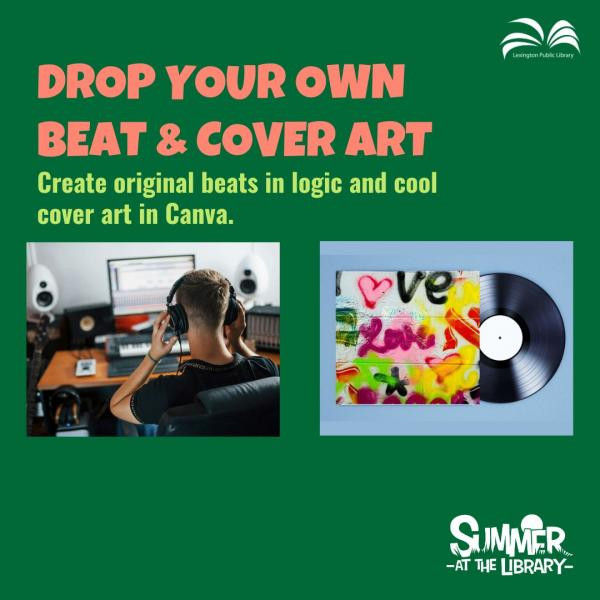
This two-day workshop introduces participants to the fundamentals of music production and digital design. During Day 1 we will create their own beat using Logic Pro. On Day 2 we’ll design professional-style cover art using Canva to match their sound and artistic vision.
This two-day workshop introduces participants to the fundamentals of music production and digital design. During Day 1 we will create their own beat using Logic Pro. On Day 2 we?ll design professional-style cover art using Canva to match their sound and artistic vision.
This two-day workshop introduces participants to the fundamentals of music production and digital design. During Day 1 we will create their own beat using Logic Pro. On Day 2 we?ll design professional-style cover art using Canva to match their sound and artistic vision.
This two-day workshop introduces participants to the fundamentals of music production and digital design. During Day 1 we will create their own beat using Logic Pro. On Day 2 we?ll design professional-style cover art using Canva to match their sound and artistic vision.
Amended and Restated Bylaws of the Friends of the Lexington Public Library, Inc.