







Website Search
Displaying results 251 - 275 of 357
The Lexington Public Library is home to four collaborative creative spaces for making, learning, exploring, and sharing. These spaces offer a variety of events, high-tech and low-tech equipment for patron use, and serve as a space to build community, explore your creativity, and develop personal interests.
Sample projects
Film a music video, 3D print a fidget toy, digitize old family photos, sew a costume or mend your favorite pair of pants, embroider a t-shirt, comb bind a book, start a podcast, record in the audio booth, create content with the green screen, make custom magnets or buttons, engrave a keychain, print a poster, make custom stickers, and more.
-
Northside Branch - Story Room
Enjoy books, music, movement, and activities that encourage early learning and promote school readiness. Recommended for ages 3-5.
-
Eastside Branch
Enjoy songs, bounces, stories, and social time for babies and their caregivers. Recommended for ages 0 to 18 months.
-
Eastside Branch - Makerspace
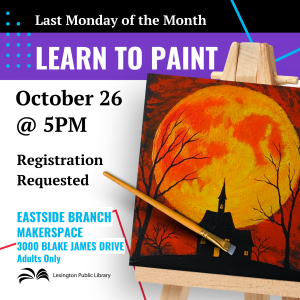
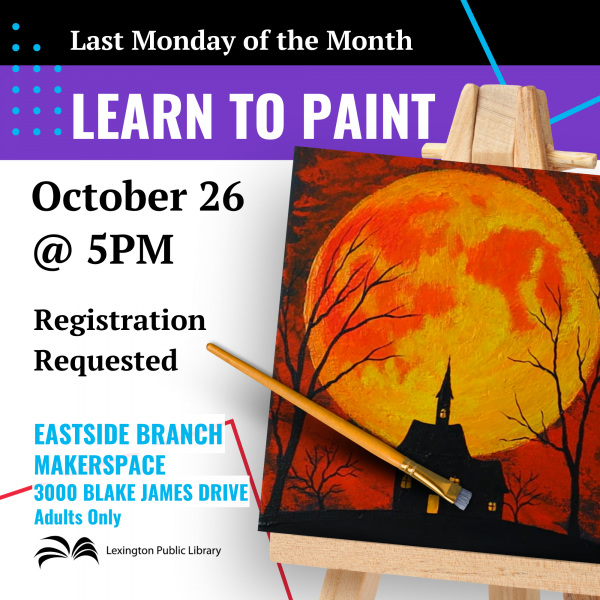
Calling all adults! Join us for a relaxing hour as we follow along with a video and learn to paint. We meet every month on the last Monday of the month. All skill levels invited. Materials will be provided as supplies last. Registration Requested.
-
Northside Branch - Medium Meeting Room
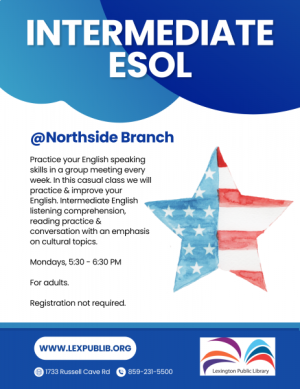
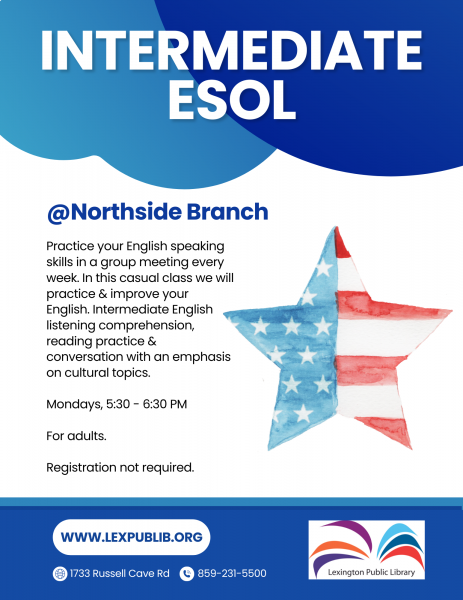
Practice your English speaking skills in a group meeting every week. In this casual class we will practice & improve your English. Intermediate English listening comprehension, reading practice & conversation with an emphasis on cultural topics. For adults. Registration is not required. FALL CLASSES BEGIN AUGUST 11.
-
Beaumont Branch - Story Area
Move, sing, read, and play in this interactive storytime for toddlers and their caregivers. Recommended for ages 18 to 36 months.
-
Tates Creek Branch
Enjoy books, music, movement, and activities that encourage early learning and promote school readiness. Recommended for ages 3-5.
-
Central Library
Enjoy songs, bounces, stories, and social time for babies and their caregivers. Recommended for ages 0 to 18 months.
-
Central Library
Move, sing, read, and play in this interactive storytime for toddlers and their caregivers. Recommended for ages 18 to 36 months.
-
Tates Creek Branch - Flexible Space
Move, sing, read, and play in this interactive storytime for toddlers and their caregivers. Recommended for ages 18 to 36 months.
-
Eastside Branch
Enjoy books, music, movement, and activities that encourage early learning and promote school readiness. Recommended for ages 3-5.
-
Marksbury Family Branch - Keeneland Community Room
Este es un ambiente divertido e informal para practicar y mejorar tu inglés. Participantes de todos los niveles de inglés, son bienvenidos. Tenemos un nuevo tema para cada reunión. Para hispanohablantes.

-
Eastside Branch - Small Meeting Room
The weekly classes will be informal and guided by a moderator. EVERYONE is welcome - ANY native language, ANY English level. No registration needed. Practica ingles y conoce gente nueva. ¡Todos son bienvenidos! ¡Todos los idiomas, todos los niveles de ingles. Jifunze Kiingereza na kukutana na watu wapya. Kila mtu anakaribishwa!
-
Central Library
Are you strange and unusual?
Do you like strange and unusual reads?
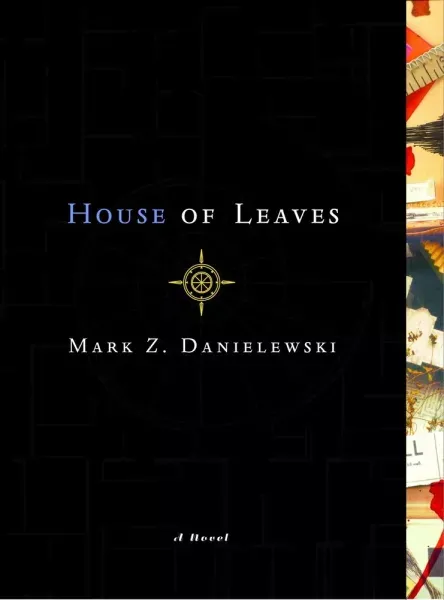
Join us at West Sixth Brewing for our monthly Cult Classics Book Club! This month, we will continue discussing "House of Leaves" by Mark Z. Danielewski. Copies of the book are available at the previous month meeting, or the Central Library's front desk.
-
Northside Branch - Story Room
Enjoy songs, bounces, stories, and social time for babies and their caregivers. Recommended for ages 0 to 18 months.
-
Marksbury Family Branch - Classroom
Move, sing, read, and play in this interactive storytime for toddlers and their caregivers. Recommended for ages 18 to 36 months.
-
Marksbury Family Branch - Keeneland Community Room
Are you interested in enhancing your Spanish speaking abilities? If so, we would like to invite you to our weekly group meeting. Our friendly group is open to everyone who wants to practice speaking Spanish in a supportive and welcoming environment. You will have the opportunity to meet new people who share your interest in the language and culture.
-
Northside Branch
Visit us weekly for gardening tips and to get advice for your gardening problems! Master Gardeners will also provide free seeds (or plants, when available) and gardening education resources.
-
Tates Creek Branch - Flexible Space
Move, sing, read, and play in this interactive storytime for young children and their caregivers. Recommended for ages 5 and under.
-
Tates Creek Branch
The weekly classes will be informal and guided by a moderator. EVERYONE is welcome - ANY native language, ANY English level. No registration needed. Practica ingles y conoce gente nueva. ¡Todos son bienvenidos! ¡Todos los idiomas, todos los niveles de ingles. Jifunze Kiingereza na kukutana na watu wapya. Kila mtu anakaribishwa!
-
Tates Creek Branch - Flexible Space
Enjoy songs, bounces, stories, and social time for babies and their caregivers. Recommended for ages 0 to 18 months.
-
Eastside Branch
Move, sing, read, and play in this interactive storytime for toddlers and their caregivers. Recommended for ages 18 to 36 months.
-
Central Library - Farish Theater
Would come stay at Hill House on Halloween?
Come see 1963's The Haunting, starring Julie Harris, Claire Bloom, Richard Johnson, and Russ Tamblyn.
Rated G.


-
Beaumont Branch - Small Meeting Room
Bury Our Bones is, “a genre-defying, unforgettable novel about immortality and hunger to sink your teeth into.”
No registration required. Copies of the book are at the Beaumont Branch Circulation desk.


-
Eastside Branch
Stop by the Children's Department to participate in a scavenger hunt. Images will be hidden around the department and it's up to you to find them all! Scavenger hunts will change throughout the month.