







Website Search
Displaying results 76 - 100 of 154
Several pieces of equipment require additional supplies such as PLA filament, vinyl, and metal backings. Some supplies are available for purchase in our learning spaces. Customers ages 13 and up who have signed the Experiential Learning Agreement and Equipment Use Policy, which is available to sign in-person at any of the four learning spaces, and live in Fayette County or a reciprocal county receive an $8 credit each month for material purchases. If you exceed this credit, you can still purchase additional supplies using credit, Mobile App Pay or Mobile Pay, or tapping to pay.
All databases are available from this page.
The Lexington Public Library is home to four collaborative creative spaces for making, learning, exploring, and sharing. These spaces offer a variety of events, high-tech and low-tech equipment for patron use, and serve as a space to build community, explore your creativity, and develop personal interests.
Sample projects
Film a music video, 3D print a fidget toy, digitize old family photos, sew a costume or mend your favorite pair of pants, embroider a t-shirt, comb bind a book, start a podcast, record in the audio booth, create content with the green screen, make custom magnets or buttons, engrave a keychain, print a poster, make custom stickers, and more.
National Library Card Sign-Up Month is an annual invitation to discover (or rediscover) all that a free library card has to offer. This year, with support from local business partners, your library card can also get you great deals at participating shops and restaurants throughout September.
Download eBooks, audiobooks, magazines, and more – free with your library card.
Find out what's happening at our locations. Browse upcoming events and discover our dedicated learning spaces. Reserve a meeting room. Explore our galleries and special collections.
Read articles from magazines and journals, learn a new language, or locate a newspaper article. These resources can't be found with a search engine but are available for free with your library card.
When you log into many of our services, you'll be asked to provide a PIN (Personal Identification Number) in addition to your library card number. Your default PIN is typically the last 4 digits of the phone number on file for your account.
Meet the Lexington Public Library's Board, Administrative Team, and Leadership Team. Apply to work or volunteer at the library.
See what's currently on display at our art galleries.
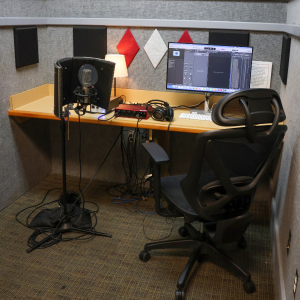
Audio booths are outfitted with a microphone, computer, headphones, and other recording equipment and software.
Musical instruments are available at the Northside Digital Studio audio booth. 32 GB flash drives are available for purchase at the Digital Studio, but you may need to bring additional storage depending on the size of the project.
The Lexington Public Library offers an Interlibrary Loan (ILL) service which allows cardholders in good standing to borrow books and receive copies of articles we do not own and cannot purchase. Our borrowing network includes over 4,000 participating public and academic libraries.
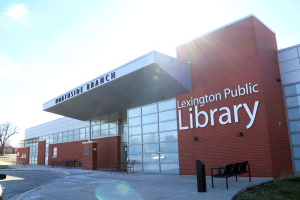
Location Hours
Monday-Thursday: 9:30am-7:00pm
Friday: 9:30am-6:00pm
Saturday: 9:30am-5:00pm
Sunday: 1:00pm-5:00pm
Location Mailing Address
1733 Russell Cave Road
Lexington, KY 40505

TeachingBooks is a collection of resources about children's and young adult books, including author and illustrator interviews, video book trailers, audio book readings, book discussion guides, and much more. Provided by the Kentucky Department for Libraries and Archives.
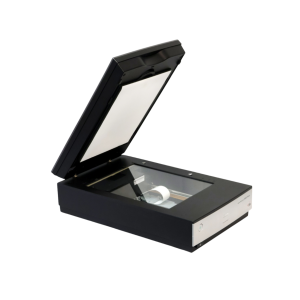
Use these to scan and digitize documents, family photographs, and other print items.
The Northside Digital Studio has 32 GB flash drives that are available for purchase, but you may need to bring additional storage depending on the size of the project.
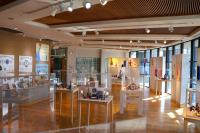
A 1,200-square-foot gallery that features a wide variety of art by local and regional artists. A participating gallery at Gallery Hop.
Jennifer talks with local author Kaitlyn Hill about her debut YA novel “Love from Scratch” and her journey in publishing. For Behind the Scenes, Erin talks with Amanda Wheeler and Bryan Klausing about the library’s experiential learning spaces and program
The Luna Library, a program of Believing in Forever, collects and distributes children's books with an African American history or Black character focus. It is an alternative for African American parents looking for books that provide context and knowledge to understand the stories of the African American experience in this country for their children. Believing in Forever is a champion of diversity and inclusion, and the positive impact books have on children of all races.
Jennifer sits down with local poet, essayist and educator Savannah Sipple about her writing and career. In Behind the Scenes, Erin talks with Lori Davis about the Library’s workforce development programming.