







Website Search
Search Website
Displaying results 501 - 525 of 562
-
Marksbury Family Branch - Classroom
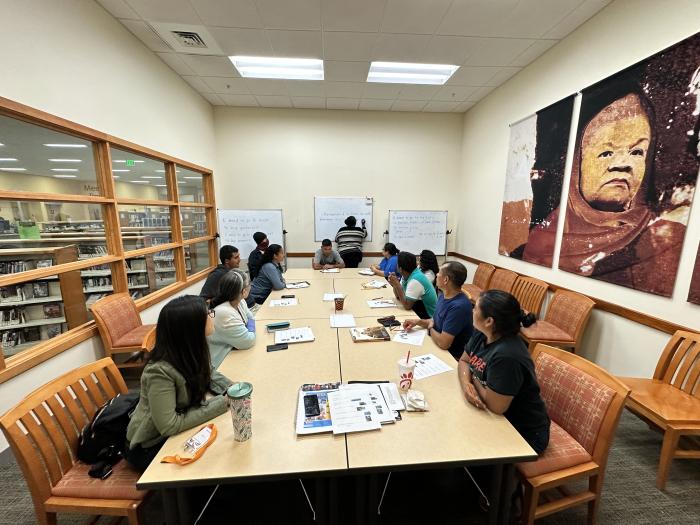
Beginning English classes are held twice weekly to help participants improve English language reading, writing, listening and speaking skills. Classes are held on Tuesday and Thursday evenings. Classes and class materials are free to everyone. Participants can practice their new skills at any of our ESOL conversation group meetings. Questions: Email abell@lexpublib.org.
-
Marksbury Family Branch - Classroom
Beginning English classes are held twice weekly to help participants improve English language reading, writing, listening and speaking skills. Classes are held on Tuesday and Thursday evenings. Classes and class materials are free to everyone. Participants can practice their new skills at any of our ESOL conversation group meetings. Questions: Email abell@lexpublib.org.
-
Marksbury Family Branch - Classroom
Beginning English classes are held twice weekly to help participants improve English language reading, writing, listening and speaking skills. Classes are held on Tuesday and Thursday evenings. Classes and class materials are free to everyone. Participants can practice their new skills at any of our ESOL conversation group meetings. Questions: Email abell@lexpublib.org.
-
Marksbury Family Branch - Classroom
Beginning English classes are held twice weekly to help participants improve English language reading, writing, listening and speaking skills. Classes are held on Tuesday and Thursday evenings. Classes and class materials are free to everyone. Participants can practice their new skills at any of our ESOL conversation group meetings. Questions: Email abell@lexpublib.org.
-
Marksbury Family Branch - Classroom
Beginning English classes are held twice weekly to help participants improve English language reading, writing, listening and speaking skills. Classes are held on Tuesday and Thursday evenings. Classes and class materials are free to everyone. Participants can practice their new skills at any of our ESOL conversation group meetings. Questions: Email abell@lexpublib.org.
-
Marksbury Family Branch - Classroom
Beginning English classes are held twice weekly to help participants improve English language reading, writing, listening and speaking skills. Classes are held on Tuesday and Thursday evenings. Classes and class materials are free to everyone. Participants can practice their new skills at any of our ESOL conversation group meetings. Questions: Email abell@lexpublib.org.
-
Marksbury Family Branch - Classroom
Beginning English classes are held twice weekly to help participants improve English language reading, writing, listening and speaking skills. Classes are held on Tuesday and Thursday evenings. Classes and class materials are free to everyone. Participants can practice their new skills at any of our ESOL conversation group meetings. Questions: Email abell@lexpublib.org.
-
Marksbury Family Branch - Classroom
Beginning English classes are held twice weekly to help participants improve English language reading, writing, listening and speaking skills. Classes are held on Tuesday and Thursday evenings. Classes and class materials are free to everyone. Participants can practice their new skills at any of our ESOL conversation group meetings. Questions: Email abell@lexpublib.org.
-
Marksbury Family Branch - Classroom
Beginning English classes are held twice weekly to help participants improve English language reading, writing, listening and speaking skills. Classes are held on Tuesday and Thursday evenings. Classes and class materials are free to everyone. Participants can practice their new skills at any of our ESOL conversation group meetings. Questions: Email abell@lexpublib.org.
-
Marksbury Family Branch - Classroom
Beginning English classes are held twice weekly to help participants improve English language reading, writing, listening and speaking skills. Classes are held on Tuesday and Thursday evenings. Classes and class materials are free to everyone. Participants can practice their new skills at any of our ESOL conversation group meetings. Questions: Email abell@lexpublib.org.
-
Marksbury Family Branch - Classroom
Beginning English classes are held twice weekly to help participants improve English language reading, writing, listening and speaking skills. Classes are held on Tuesday and Thursday evenings. Classes and class materials are free to everyone. Participants can practice their new skills at any of our ESOL conversation group meetings. Questions: Email abell@lexpublib.org.
-
Marksbury Family Branch - Classroom
Beginning English classes are held twice weekly to help participants improve English language reading, writing, listening and speaking skills. Classes are held on Tuesday and Thursday evenings. Classes and class materials are free to everyone. Participants can practice their new skills at any of our ESOL conversation group meetings. Questions: Email abell@lexpublib.org.
-
Marksbury Family Branch - Classroom
Beginning English classes are held twice weekly to help participants improve English language reading, writing, listening and speaking skills. Classes are held on Tuesday and Thursday evenings. Classes and class materials are free to everyone. Participants can practice their new skills at any of our ESOL conversation group meetings. Questions: Email abell@lexpublib.org.
-
Marksbury Family Branch - Classroom
Beginning English classes are held twice weekly to help participants improve English language reading, writing, listening and speaking skills. Classes are held on Tuesday and Thursday evenings. Classes and class materials are free to everyone. Participants can practice their new skills at any of our ESOL conversation group meetings. Questions: Email abell@lexpublib.org.
The Marksbury Family Branch Makerspace, located at 2197 Versailles Road, is an inclusive space where customers of all ages can come to learn, create, and explore together, free of charge. Outfitted with current high-tech and low-tech tools, the Makerspace is designed to promote education and cultivate a do-it-yourself spirit for the whole family. Customers ages 7 and under must be accompanied by a responsible caregiver. Planning to bring a group of 10 or more? Please contact us by calling 859-231-5500 ext.2822 or using the link below.
Sample projects
Engrave a bookmark for your next read, design matching t-shirts for your family vacation, personalize a coffee mug, embroider a t-shirt, or print fun stickers for your new business.
The Digital Studio provides people of all skill levels the equipment, software, and AI creative tools for filmmaking, photography and digital art, music making, and media preservation.
Find out what's happening at our locations. Browse upcoming events and discover our dedicated learning spaces. Reserve a meeting room. Explore our galleries and special collections.
Location Hours
Monday-Thursday: 9:30am-7:00pm
Friday: 9:30am-6:00pm
Saturday: 9:30am-5:00pm
Sunday: 1:00pm-5:00pm
Location Mailing Address
140 East Main Street
Lexington, KY 40507
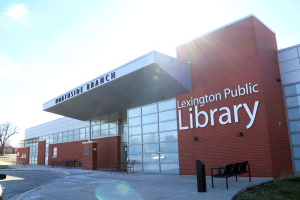
Location Hours
Monday-Thursday: 9:30am-7:00pm
Friday: 9:30am-6:00pm
Saturday: 9:30am-5:00pm
Sunday: 1:00pm-5:00pm
Location Mailing Address
1733 Russell Cave Road
Lexington, KY 40505
See what's currently on display at our art galleries.
Mariam interviews Doug Tattershall, author of Belle Brezing: American Magdalene, about his book. They discuss Belle Brezing’s early life, her years as the nationally known brothel owner, and the generally unknown final years of her life in seclusion.

Stories of Lexington's history told through the Kentucky Room archives.
Advisory Board
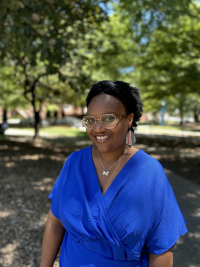
Shawntaye Hopkins is the Marketing and Communications Director at the University of Kentucky J. David Rosenberg College of Law. Before landing at the University of Kentucky, Shawntaye worked as a newspaper reporter, a public relations specialist at another university, and as a communications associate for a nonprofit, nonpartisan organization serving state governments. Shawntaye has a bachelor’s degree in journalism from Western Kentucky University. Her hobbies include reading and writing about books, mostly fiction.
Jennifer and Erin discuss three new vegetarian cookbook titles and some of the issues that can come up with vegetarian cooking.
Erin and Jennifer review three international cookbooks and review one recipe from each. The books reviewed in this episode are Lidia’s Celebrate Like an Italian by Lidia Bastianich, Mastering the Art of Japanese Home Cooking by Masaharu Morimoto, and Chai