







428 East Maxwell Street. August 1984
Instantly borrow eBooks and audiobooks free with your library card — anytime, anywhere. Use the Libby app to create wish lists, get notified of new releases, and send eBooks straight to your tablet or Kindle.
Hit record in the new podcast studio — now open at the Northside Digital Studio! Whether you're just starting or leveling up, the space is ready for your voice.
Everyone deserves a place to discover something new. The Lexington Public Library champions free and open access to information, offering a safe and welcoming space where neighbors can learn, create, and connect. Your support empowers a community engaged in lifelong discovery.
Whether you’re into mysteries, memoirs, cookbooks, classics, or something in between, we’ve got a club for you. Choose from a variety of book clubs for different ages and interests or join us for a readers and writers event.
Schedule a one-on-one consultation to learn library skills, get help with research and job searches, have a test proctored by one of our librarians, and more.
A born-and-raised Lexingtonian, Hunter attended Lexington Catholic High School and graduated with a B.S. in Economics from the University of Kentucky Gatton College of Business and Economics in 2015. He is currently a Senior Associate at BC Wood Properties, a commercial real estate investment company, where he manages 1.8 million square feet of commercial space throughout six states. Hunter has a passion for community involvement, serving on various boards for the Explorium of Lexington, United Way of the Bluegrass, University of Kentucky DanceBlue Marathon, and Make-A-Wish Kentucky.
Search selected articles in Lexington newspapers about significant people, places, and events from 1787-2007.
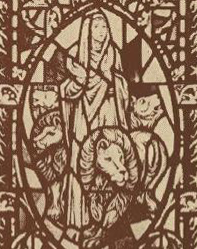
Fayette County churches contain some of the earliest records and information preserved about central Kentucky history. The digital archive contents include church ledgers, minutes, directories, and informational brochures.
The Lexington Weekly Press was published every Wednesday in Lexington, Kentucky, and contained local, state, and foreign news. The paper focused on Central Kentucky’s “agriculture, manufactures and fine stock”, as well as literary and scientific news, market reports, and serial stories. Local weddings, deaths, community events, and elections for Lexington and the surrounding region. The paper was sent anywhere in the United States at a cost of one dollar per year.
The Lexington Public Library believes this item is in the public domain and has no known US Copyright restrictions; however, it may be subject to rights of privacy, publicity, or other restrictions. Though not required, we would greatly appreciate our collection users to credit us as the source. Please use the following statement, "Courtesy of the Lexington Public Library," and provide a link back to the item or collection on our Digital Collections site, www.lexpublib.org/digital-archives. Doing so helps us track how our collections are used and helps justify freely releasing more content in the future. Please contact the library at elibrarian@lexpublib.org for permission questions, collection information, and higher resolution image requests.
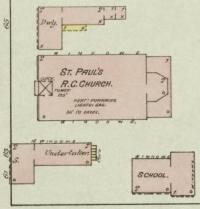
St. Paul the Apostle Roman Catholic Church was formally created in the Covington Diocese in 1868, by Father John Bekkers.

The Luna Library, a program of Believing in Forever, collects and distributes children's books with an African American history or Black character focus. It is an alternative for African American parents looking for books that provide context and knowledge to understand the stories of the African American experience in this country for their children. Believing in Forever is a champion of diversity and inclusion, and the positive impact books have on children of all races.
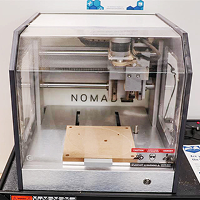
Use this router for small scale wood milling with a maximum size of 8x8x3 inches. Please supply your own personal items for milling. Speak with an Eastside Makerspace staff member to schedule an appointment to use the CNC router.
Visit the following learning spaces to get started.
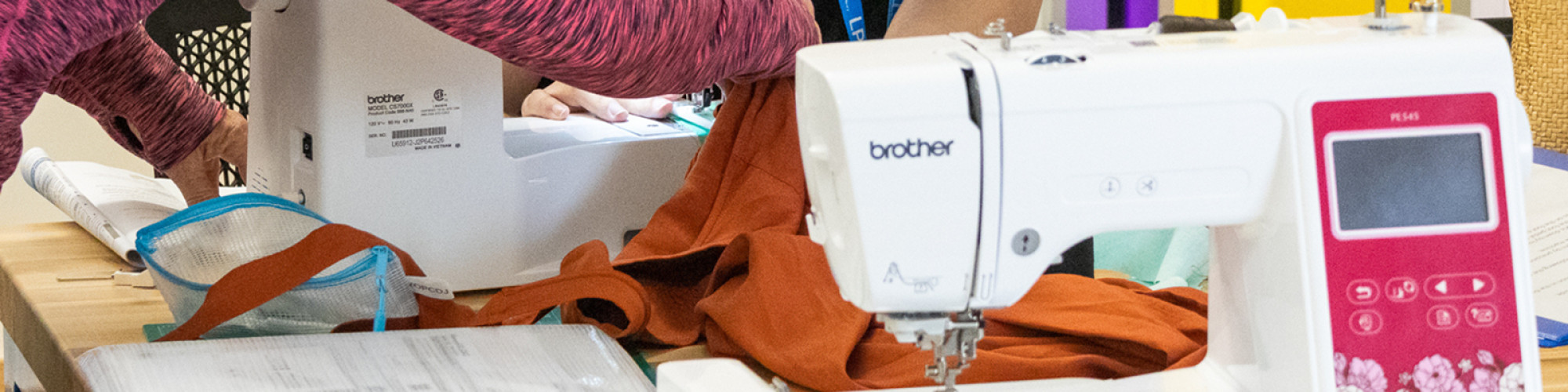
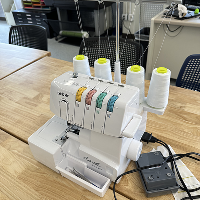
This item is available for use in advanced sewing projects. Needles, notions, and thread are provided in the Eastside Makerspace. Please bring your own material, as well as thread if you require something specific.
Visit the following learning spaces to get started.
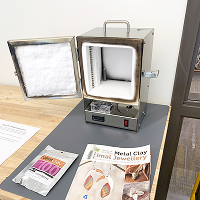
Fire small pieces made of precious metal clay. Machine can hold items up to 2.5x1.5”. Please supply your own personal materials for firing. Speak with an Eastside Makerspace staff member to schedule an appointment to use the tabletop kiln.
Visit the following learning spaces to get started.
The Lexington Weekly Press was published every Wednesday in Lexington, Kentucky, and contained local, state, and foreign news. The paper focused on Central Kentucky’s “agriculture, manufactures and fine stock”, as well as literary and scientific news, market reports, and serial stories. Local weddings, deaths, community events, and elections for Lexington and the surrounding region. The paper was sent anywhere in the United States at a cost of one dollar per year.

The Independent Gazetteer was founded and printed by James Charless in 1803, with ads appearing in the Kentucky Gazette about its upcoming publication. The first issue was printed March 29, 1803. The paper was later sold to Robert Kay…
Program features the activities and accomplishments of the previous year’s Empress and Emperor while providing the layout of the current year’s coronation proceedings. Features advertisements for local businesses and photographs of the…
Etta Evans Gilmore was born in Fleming County, Kentucky, on February 4, 1885, to Robert Evans and Matilda Fawns. She married Henry Steele Gilmore, a Bath County physician, around 1906. Their son Robert was born in 1906 and daughter…
The Daily Argonaut began in 1895 and seems to have ceased publication in 1899. This collection includes scattered issues from 1895, 1896, 1897 and 1898.
The Kentucky Leader was published from 1888 until the name changed in 1895 to the Daily Leader. They focused on local and national news. The Daily Leader was published from 1895-1901 until the name was changed to the Lexington Leader.…
This collection consists of Black community news published under the headline “Colored Churches,” “In Colored Circles,” or “Colored Notes”; and other articles of social interest, including marriages, public events, and obituaries.
The Reporter was a weekly Republican paper, occasionally semi-weekly when Congress was in session. Continued publication throughout the War of 1812.
The Kentucky Reporter is the weekly continuation of The Reporter, which changed names in October 1817. It reports on local and national news. 1827 is the only semi-weekly run of this newspaper.
This work contains information about French Emigrants to America over the years 1789-1799, and provides a history of the French Revolution. The work was originally in French, and was translated into English by an anonymous translator…
The True American was an anti-slavery newspaper started by Cassius Marcellus Clay in June 1845. He ran the paper in Lexington until August of 1845, when he published an article deemed so incendiary that at court injunction was issued…
The Eastern Kentucky Review contains articles about Eastern Kentucky State Teachers College. This particular issue contains photos of buildings, graduating seniors, students, clubs, and activities, and includes photos and information…
This is a handwritten series of lectures detailing Samuel D. McCullough's memories of his childhood and life in Lexington, Kentucky, accompanied by letters and a photograph of his house.
Compiled by Cyrus Parker Jones, a man formerly enslaved by the Parker family, these funeral notices cover 667 funerals of individuals in Lexington, including seven free blacks. The funeral notices cover the years 1806-1886. Jones…
Scans of the Black Marriage records from the Courthouse in Greenville, Kentucky.
This collection of letters to and from portrait artist Sudduth Goff (1887-1965) is part of the library's Duncan-Goff scrapbook collection.
The Lexington Weekly Press was published every Wednesday in Lexington, Kentucky, and contained local, state, and foreign news. The paper focused on Central Kentucky’s “agriculture, manufactures and fine stock”, as well as literary and…
The Kentucky Gazette was the first paper established west of the Allegheny Mountains. The frontier paper focused on East Coast and International news, though some local announcements can be found. Later, the paper focused on…
The diary (ca. 1899) of Katherine Pettit, details her settlement work for the Kentucky Confederation of Women's Clubs, made yearly trips to Hazard during this period and was a central figure in establishing the Hindman (Kentucky)…
This letter collection was collected by Judge Kenneth Lyons. The earliest date of the letters is 1862, from Bourbon and Nicholas Counties, Kentucky. Some letters are fragments.
This half of the record book contains burial records for St. Paul Catholic Church parishioners.
The city report covers the outline of a citizen participation work plan and its connection with neighborhood groups, as well as the results of those meetings and community concerns that took place throughout 1969. It contains…
The 1906-07 Lexington cross directory contains residential and business information for the city, arranged both alphabetically and by street, with a business listing by category. It also contains city officials and departments, and…
Letters to and from Father William T. Punch (1874-1933). Father Punch was instrumental in building the 3rd St. Peter Catholic Church on Barr Street in Lexington, KY.
The Elmer L. Foote Collection is a group of 190 lantern slides. They were created by Elmer L. Foote, a Cincinnati photographer and library staff member whose pictures appeared in the Cincinnati Commercial Tribune.
The Daily Lexington Atlas ran from late 1847 through early 1849 and was Lexington’s first daily paper, and the first to publish information from the telegraph lines. It is described by William Perrin in his 1882 History of Fayette…