







Website Search
Search Website
Displaying results 476 - 500 of 546
Walking Tour
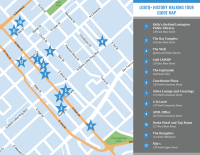
Join us for a walking tour of Downtown Lexington’s historic LGBTQ+ places. The full tour is available as a single MP3, or you can download individual tracks. For the single MP3, music will play between the stops. You can pause the track while you walk between stops.
This tour covers a walking distance of 1.6 miles.
Join us for a walking tour of Downtown Lexington’s historic LGBTQ+ places. The full tour is available as a single MP3, or you can download individual tracks. For the single MP3, music will play between the stops.
Jennifer hosts a staff discussion of the Lexington Public Library’s Community Read, The Sum of Us by Heather McGhee. Erin interviews AnnaMarie about DEI at the library.
Jennifer talks with local poet Danni Quintos about her work and latest book release Two Brown Dots. In Behind the Scenes, Erin hears from librarians Jennie and Mary about LPL After School. Danni closes the podcast with a reading from Two Brown Dots.
Jennifer welcomes back Lynn Hightower to discuss more about her book The Enlightenment Project and her own experiences with the supernatural. Lynn closes the podcast with a reading from The Enlightenment Project.
If books are your thing, this is your place. Browse the newest titles in our collection, take a deep dive into comics and graphic novels with the 741.5 bulletin, request a personalized "bag of books," and more.
Learning doesn’t stop at the end of the school day. The Lexington Public Library is here to support your education at every level, from birth through college, with skill-building tools, live tutoring, standardized test prep, after-school programs, and more.
Jennifer talks with local author Kaitlyn Hill about her debut YA novel “Love from Scratch” and her journey in publishing. For Behind the Scenes, Erin talks with Amanda Wheeler and Bryan Klausing about the library’s experiential learning spaces and program
Jennifer sits down with local poet, essayist and educator Savannah Sipple about her writing and career. In Behind the Scenes, Erin talks with Lori Davis about the Library’s workforce development programming.
Join us for updates on library happenings, book recommendations, interviews, and more!
Friends of the Lexington Public Library provides financial, advocacy and volunteer support to the Library. Shop at the Friends Book Cellar in the Central Library for a great selection of used books, magazines, CDs, DVDs, audiobooks, and vinyl records, all at discounted prices.