







The first Kentucky almanacs were printed by John Bradford, on the same printing press that published the Kentucky Gazette. The Kentucky almanacs in the library's…

In 1822, a secret family moves into a secret cabin some thirty miles northeast of Baltimore, to farm, to hide, and to bear ten children over the course of the next sixteen years. Junius Booth--breadwinner, celebrated Shakespearean actor, and master of the house in more ways than one--is at once a mesmerizing talent and a man of terrifying instability.
Este es un ambiente divertido e informal para practicar y mejorar tu inglés. Participantes de todos los niveles de inglés, son bienvenidos. Tenemos un nuevo tema para cada reunión. Para hispanohablantes.
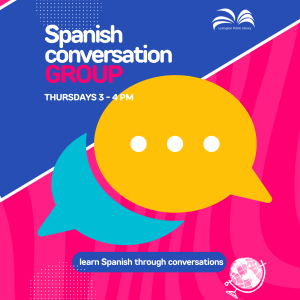
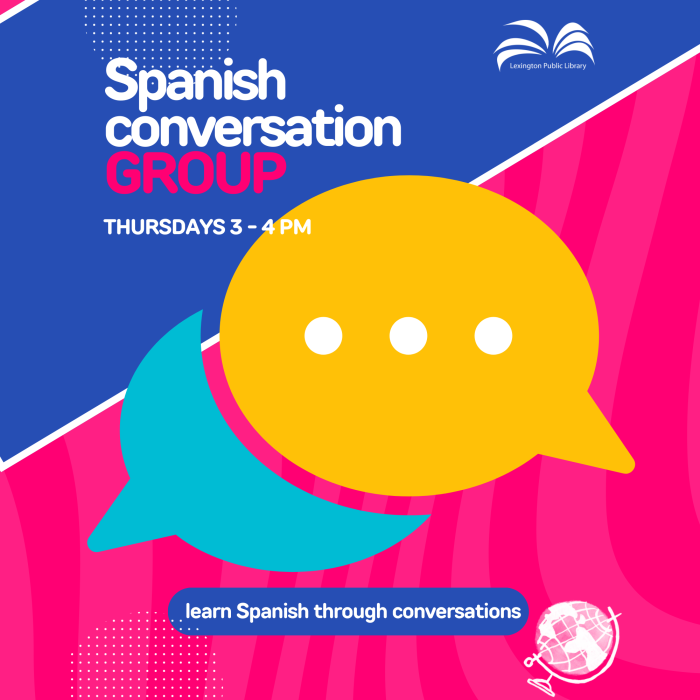
Are you interested in enhancing your Spanish speaking abilities? If so, we would like to invite you to our weekly group meeting. Our friendly group is open to everyone who wants to practice speaking Spanish in a supportive and welcoming environment. You will have the opportunity to meet new people who share your interest in the language and culture.
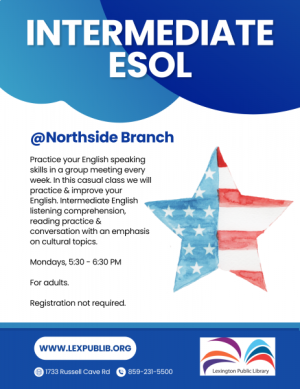
Practice your English speaking skills in a group meeting every week. In this casual class we will practice & improve your English. Intermediate English listening comprehension, reading practice & conversation with an emphasis on cultural topics. For adults. Registration is not required. FALL CLASSES BEGIN AUGUST 11.
Practice your English speaking skills in a group meeting every week. In this casual class we will practice & improve your English. Intermediate English listening comprehension, reading practice & conversation with an emphasis on cultural topics. For adults. Registration is not required. FALL CLASSES BEGIN AUGUST 11.
Practice your English speaking skills in a group meeting every week. In this casual class we will practice & improve your English. Intermediate English listening comprehension, reading practice & conversation with an emphasis on cultural topics. For adults. Registration is not required. FALL CLASSES BEGIN AUGUST 11.
Practice your English speaking skills in a group meeting every week. In this casual class we will practice & improve your English. Intermediate English listening comprehension, reading practice & conversation with an emphasis on cultural topics. For adults. Registration is not required. FALL CLASSES BEGIN AUGUST 11.
The photographs in the library's collection are donated from a variety of individuals.
The Ashland-McDowell Collection shows an unknown gathering of friends and family at the Ashland estate, taken circa 1894, which included a parade of the estate’s horses. Thoroughbreds Impetuous, King Reine, Oratorio, Argentina, and Bracegirdle are all being proudly shown at this event. Photos also show members of the McDowell family in attendance, including Major McDowell and his wife, and their daughters Nanette, Julia, and Madeline. The author John Fox Jr. was a frequent guest of the McDowells at Ashland and can be seen in one image playing a banjo on the lawn.
The Lena Hart Tobey Collection contains 12 photos. Lena Hart Tobey (1869-1939) was born in Mississippi to Thomas and Susan Watson Hart. In the 1890s, she attended school in Lexington, Kentucky. She married Ellis Tobey in 1896 and died in 1939 in Arkansas. After Lena Hart Tobey's death, her daughter Myrtis inherited a collection of photographs in a scrapbook. The family donated the Lexington, Kentucky marked cabinet cards to the Lexington Public Library in 2001. Some of the young adults in the photos have been named, though most have not.
The other images are miscellaneous photos donated from different sources.
The first Kentucky almanacs were printed by John Bradford, on the same printing press that published the Kentucky Gazette. The Kentucky almanacs in the library's…
Fayette County's buildings contain a great deal of history about the region and its inhabitants. The earliest structure in Lexington was built in 1779, the Blockhouse. Lexington currently has over…
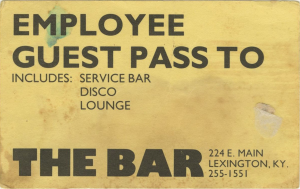
The collection consists of an image, homemade brochures, flyers, pamphlets, and programs covering LGBTQ+ events and places from 1983 to 1999 in both Lexington and Louisville. Subjects include…
The Bath County Memorial Library was founded in 1949 by the Owingsville Women’s Club, and opened in January, 1950. It expanded into a bookmobile in 1953, and in 1963 moved into the old Farmer’s…
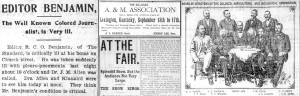
The Black Community News Collection compiles searchable newspaper articles and ads for local Black community events, schools, social gatherings, church events, obituaries, and wedding…
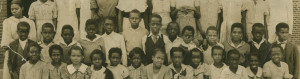
The Brown-Hocker Collection is a community collection of photos and realia from African American events and people in Lexington and Kentucky history.
The objects in the collection are…
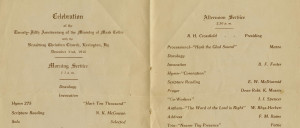
This collection contains materials from Lexington and Fayette County religious groups.
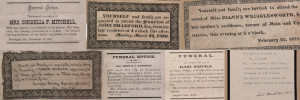
Compiled by Cyrus Parker Jones, a man formerly enslaved by the Parker family, these funeral notices cover 667 funerals of individuals in Lexington, including seven free blacks. The funeral notices…
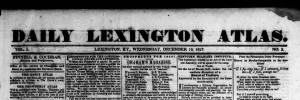
The Daily Lexington Atlas ran from December 11, 1847 through November 20, 1848 and was Lexington’s first daily paper, and the first to publish information from the telegraph lines. It was…
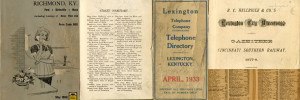
The library has a variety of directories and yearbooks with local information. In the library's current digital collection, there is a selection of residential and street directories, yearbooks,…
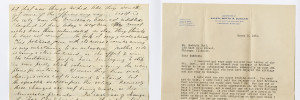
Various objects found in our Duncan-Goff scrapbook collection.
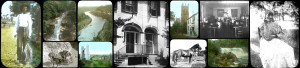
Elmer L. Foote served as official photographer of the Cincinnati Public Library for many years, and produced photographs that appeared in the Cincinnati Commercial Tribune …
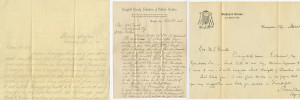
Letters from and/or about Father William T. Punch and the Punch family. Donated by a Lexington resident to Lexington Public Library. Father Punch was instrumental in building…
Until 1974, Lexington and Fayette County had two separate governing bodies. Lexington itself was founded in 1775 and chartered in 1782 by an act of the Virginia General Assembly,…
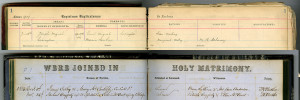
The St. Paul Catholic Church Collection includes materials from the Church's archive. The Roman Catholic church is over 150 years old, and is located on West Short Street, in downtown Lexington.…
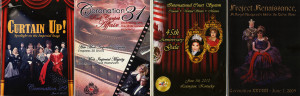
Founded in 1982 by Gigi Galore (Greg Butler) and Blanche Pink (Marlon Austin), the Imperial Court of Kentucky, Inc., is a nonprofit charity that supports the LGBTQ+ community of…
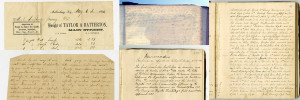
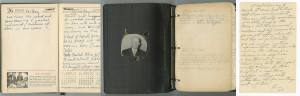
The Judge Kenneth Lyons collection consists of an atlas, a journal, and letters. The atlas features copies of letters written on the blank pages of the atlas. The journal contains family and local…
The Junior League of Lexington (JLL) is a local nonprofit organization of women committed to improving community through volunteerism. The first Junior League was established in 1901…
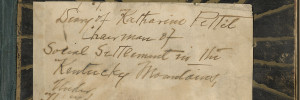
The diary (ca. 1899) of Katherine Pettit, details her settlement work for the Kentucky Confederation of Women's Clubs, made yearly trips to Hazard during this period and was a central figure in…
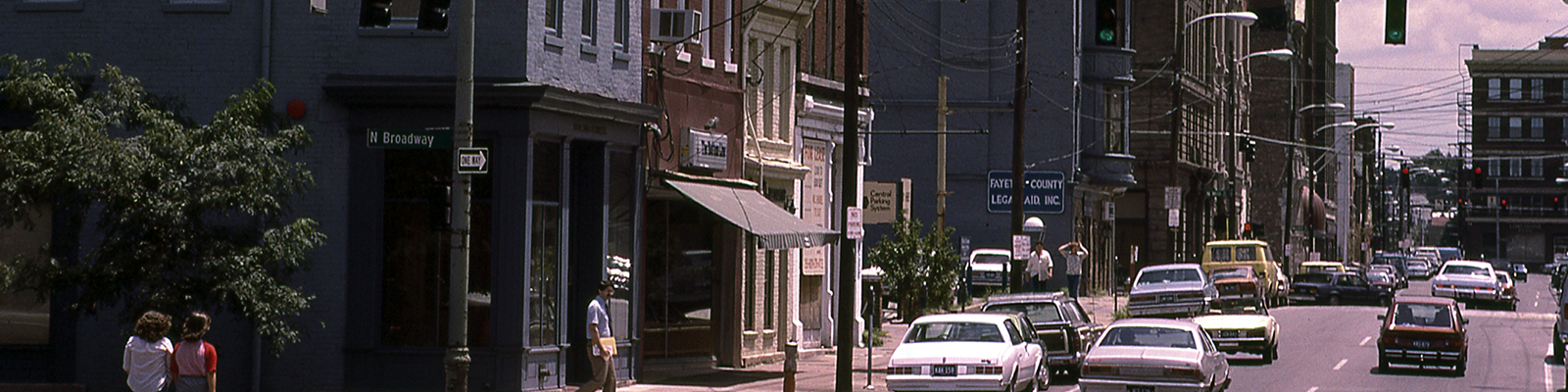
The Dunn Photograph Collection contains images of Lexington, KY taken in the 1960s and 1980s. Keller J. Dunn (1917-2000) born in Lexington, KY, shot hundreds of pictures of…
The library's collection contains many event pamphlets for Lexington and Kentucky counties, including county anniversary celebrations, suffragette songs, chautauquas, and community events and…
The photographs in the library's collection are donated from a variety of individuals.
The Ashland-McDowell Collection shows an unknown gathering of friends and…
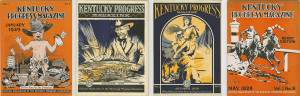
The Kentucky Progress Commission was formed in 1928 in order to draw tourism and business to Kentucky. It was formed by the Kentucky Legislature, and was a 12 person board. The “Kentucky…
The League of Women Voters of Lexington, Kentucky, was established in 1920. It is the local chapter of a national nonpartisan nonprofit organization that encourages informed and…
The Lexington History Museum began in 1998, and opened its doors in the Old Courthouse in 2003. Its purpose is to educate Fayette County about its rich history, and preserve pieces of that history…
The Lexington Public Library opened a Carnegie library in 1905. It incorporated the collections of the former subscription Lexington Library Company (est.1801) and the former…
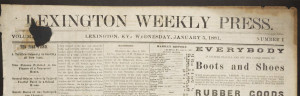
The Lexington Weekly Press was published every Wednesday in Lexington, Kentucky, and contained local, state, and foreign news. The paper focused on Central Kentucky’s “agriculture,…
The military history collection contains relevant histories and records that focus on Kentuckians involved at home and abroad, and includes a collection of United States Army Training Center…
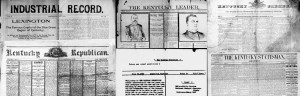
The Micellaneous Newspaper collection combines scattered issues of various historic newspapers in our archive collection.
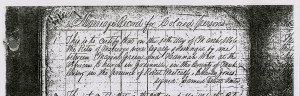
Scans of the Black Marriage records from the Courthouse in Greenville, Kentucky.
The collection contains various postcards featuring places in and around Kentucky and includes a selection donated by the Knowles family. The postcards in the library's collection were donated by…
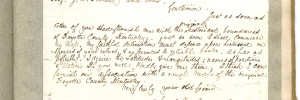
This is a handwritten series of lectures detailing Samuel D. McCullough's memories of his childhood and life in Lexington, Kentucky, accompanied by letters and a photograph of his house. The…
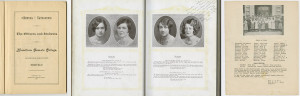
The Schools and Yearbooks collection contains historical and modern yearbooks and other school documents owned by and donated to the Lexington Public Library.
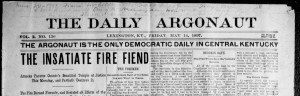
The Daily Argonaut began in 1895 and seems to have ceased publication in 1899. This collection includes scattered issues from 1896, 1897 and 1898. The paper focuses more on sensational news and…
The Independent Gazetteer was founded and printed by James Charless in 1803, with ads appearing in the Kentucky Gazette about its upcoming…

The Kentucky Gazette was the first paper established west of the Allegheny Mountains, founded by John and Fielding Bradford. The frontier paper focused on East Coast and International news,…
The Kentucky Reporter was published from October 1817-April 1832, by William W. Worsley and Thomas Smith. It is the direct continuation of the The Reporter. Politically, it was a…
The Reporter was published from March 1808-September 1817, by William W. Worsley. It was a Republican paper (Jeffersonian Democratic Republican - liberal at the time). The paper was published…
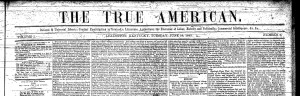
The True American was an anti-slavery newspaper started by Cassius Marcellus Clay in June 1845. He ran the paper in Lexington until August of 1845, when he published an…
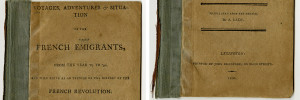
This work contains information about French Emigrants to America over the years 1789-1799, and provides a history of the French Revolution. The work was originally in French, and was translated…
You can request a "Bag of Books" to access our materials when you're unable to browse in person. Complete this form, and we'll pull up to 10 items that match your specified interests. You can help us locate more items by keeping your requests general.
The Lexington Public Library is pleased to offer teachers, childcare providers, and homeschooling families the "Bucket of Books" service. We can supplement your curriculum with specially-selected books on a particular topic or provide your classroom with specially-selected books for your students' pleasure reading.
Lexington, Kentucky (February 1, 2024) – This February, Lexington Public Library is proud to join the nation in celebrating Black History Month, a time dedicated to honoring the achievements, contributions, and rich cultural heritage of African Americans.
Subscribe to receive library news in your email inbox.
Subscribe and receive monthly reading recommendations in your selected categories.
The William Stamps Farish Fund Theater is a state-of-the-art facility in one of Main Street’s busiest places.
Fully renovated and updated, the theater on the Central Library’s first floor is home to theater, dance, live music, film, community events, and meetings. The Lexington Public Library makes the facility available at some of the city’s best prices, with affordable business, nonprofit, and government rates.
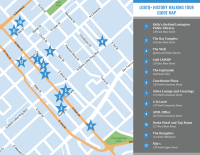
Join us for a walking tour of Downtown Lexington’s historic LGBTQ+ places. The full tour is available as a single MP3, or you can download individual tracks. For the single MP3, music will play between the stops. You can pause the track while you walk between stops.
This tour covers a walking distance of 1.6 miles.
Join us for a walking tour of Downtown Lexington’s historic LGBTQ+ places. The full tour is available as a single MP3, or you can download individual tracks. For the single MP3, music will play between the stops.
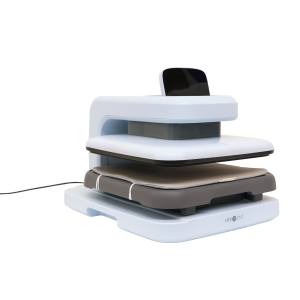
Use a variety of heat presses to transfer your original designs on to personal items.
The Marksbury Family Branch Makerspace has an automated heat press, large and small handheld presses, sublimation printer, and Cricut machines. The Eastside Makerspace has a small handheld press, automated heat press, and Cricut machines. Please supply your own personal items to transfer on to. Sublimation paper and heat transfer vinyl are available for purchase, or you can use your own free of charge. Speak with a staff member before bringing or using your own materials.
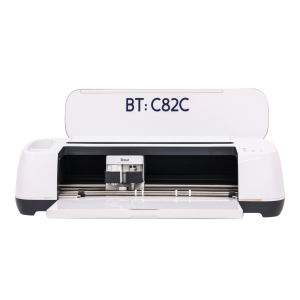
Cricut machines can cut 12 x 24-inch vinyl, fabric, and paper products. 12 x 12-inch transfer tape, permanent vinyl, and heat transfer vinyl are available for purchase, or you can use your own materials free of charge. Speak with a staff member before use if you are bringing your own materials.

Do you need to learn new software, technology, creative or business skills to achieve your professional or personal goals? LinkedIn Learning gives you unlimited access to a vast library of high quality video tutorials taught by recognized industry experts. You can work at your own pace with provided exercise files. Available on your personal computer or mobile device. (Note: To log into the mobile app, enter lex for your Library ID. You will be prompted to enter your library card number and PIN.)
Thank you for thinking of the Friends Book Cellar for donating your: books, CDs, DVDs, and current year magazines.
Our commitment to listening, learning and changing is ongoing and our work is never complete. We affirm that we achieve more together because of our differences, not despite them. When all voices are heard, we are stronger.
Learning doesn’t stop at the end of the school day. The Lexington Public Library is here to support your education at every level, from birth through college, with skill-building tools, live tutoring, standardized test prep, after-school programs, and more.
Join us this month to make...
While supplies last
No registration required
The Lamb is a folktale, a horror story, a love story, an enchantment. With this teeming, gothic debut, Lucy Rose wrings the relationship between mother and daughter until blood drips from it.
No registration required. Copies of the book are at the Beaumont Branch Circulation desk.