







The first Kentucky almanacs were printed by John Bradford, on the same printing press that published the Kentucky Gazette. The Kentucky almanacs in the library's…

The Lexington Public Library allows access to its records, pursuant to KRS 61.870 to 61.884.
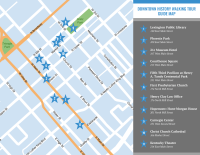
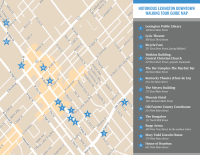
Join us for a walking tour of Downtown Lexington’s historic sites. The full tour is available as a single MP3, or you can download individual tracks. For the single MP3, music will play between the stops. You can pause the track while you walk between stops.
This tour covers a walking distance of 1.1 miles.
The music clips used in this tour are from “Walking Barefoot on Grass” by Kai Engel, and are used with a CCBY license. It is available here: http://freemusicarchive.org/music/Kai_Engel/
Join us for a walking tour of Downtown Lexington’s historic sites. The full tour is available as a single MP3, or you can download individual tracks. For the single MP3, music will play between the stops.
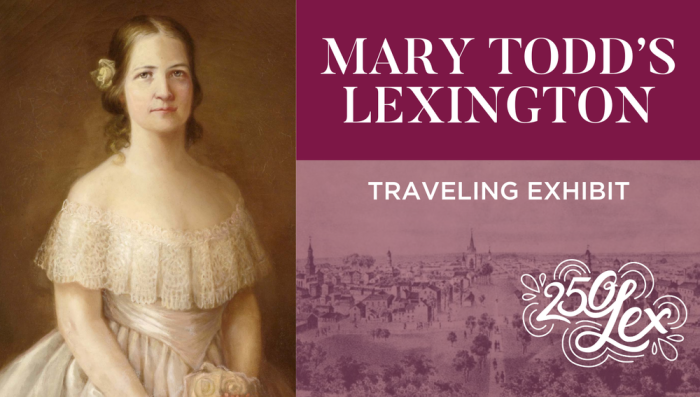
Discover early 19th-century Lexington in this four-panel traveling exhibit created by the Mary Todd Lincoln House. Images and text illustrate city life, the economy, schools and churches, and arts and leisure during the years Mary Todd lived in Lexington (1818-1839). Text is written for ages 12-up. Free.
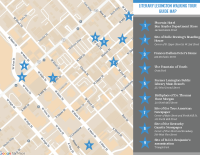
Join us for a walking tour of Lexington’s literary history!
Tour Length 1.05 miles
The music clips used in this tour are from “Walking Barefoot on Grass” by Kai Engel, and are used with a CCBY license. It is available here.
Join us for a walking tour of Lexington’s literary history!
Tour Length 1.05 miles
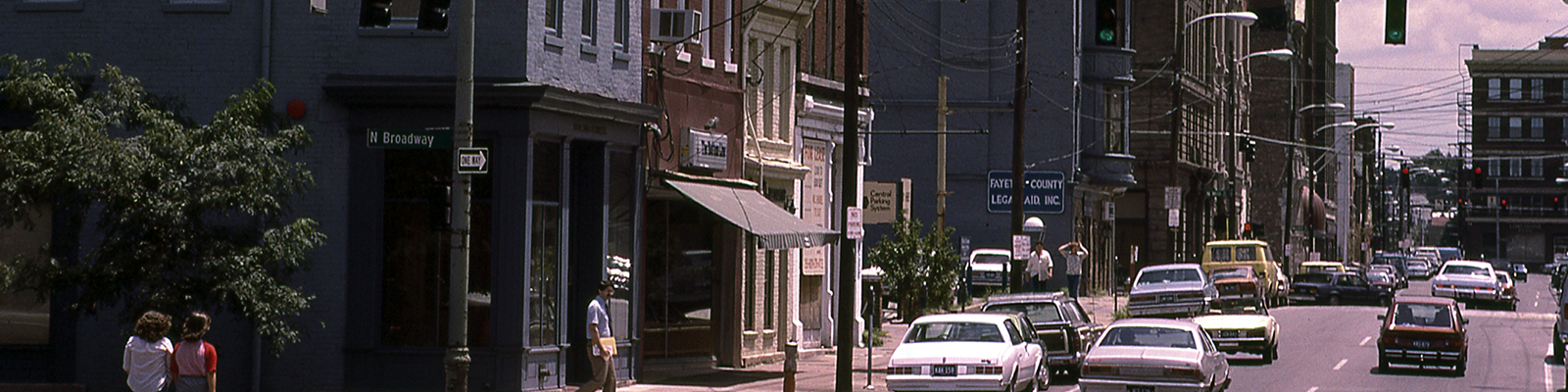

The Kentucky Gazette was the first paper established west of the Allegheny Mountains, founded by John and Fielding Bradford. The frontier paper focused on East Coast and International news, though some local announcements can be found. Later, the paper focused on disseminating opinions on politics and issues of concern on the frontier. When political parties emerged, the paper developed a Democratic (conservative at the time) bent. John Bradford handed the reins of the paper over to his son, Daniel Bradford, in 1802.
While still owned and occasionally edited by the Bradford family, the paper had several editors and publishers through the mid-1830s, when Daniel Bradford returned to the paper’s byline as editor. Daniel Bradford edited the paper until 1840, when he sold it to Jim Cunningham. The paper shuttered in 1848, due to Cunningham’s failing health, but was revived in 1866 and published until 1910 by different publishers.
The years 1841-1910 are not digitized as of January 2020, but are viewable on microfilm and in print in the Kentucky Room at Central Library. Selected articles are indexed in the Library’s Local History Index.
The Kentucky Room’s collection of The Kentucky Gazette is not complete. Here is a list of what is missing from the digitized collection:
1788: April 5, May 31, September 20
1789: All of May
1790: August 9 – November 27, December 27
1791: April 2, July 30, All of August, September 3, 10, 24, October 1
1792: April 2, September 15 - November 17
1793: May 4, June 15, July 20
1794: May 24, June 21, August 9 – September 13
1795: March 21, August 29, September 5, 12, 26, October 17
1807: Entire Year
1808: Entire Year
1821: January 26, February 1, 9, 16, March 29, April 5, May 3, 17, 24, 31, All of June, July 5, 19, August 9, 23, 30, September 20, October 18-December 27
1822: Entire Year
1823: Entire Year
1824: Entire Year
1827: Entire Year
1828: Entire Year
1829: Entire Year
1830: Entire Year
1831: Entire Year
1832: Entire Year
1833: Entire Year
1834: Entire Year
The first Kentucky almanacs were printed by John Bradford, on the same printing press that published the Kentucky Gazette. The Kentucky almanacs in the library's…
Fayette County's buildings contain a great deal of history about the region and its inhabitants. The earliest structure in Lexington was built in 1779, the Blockhouse. Lexington currently has over…
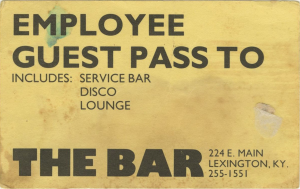
The collection consists of an image, homemade brochures, flyers, pamphlets, and programs covering LGBTQ+ events and places from 1983 to 1999 in both Lexington and Louisville. Subjects include…
The Bath County Memorial Library was founded in 1949 by the Owingsville Women’s Club, and opened in January, 1950. It expanded into a bookmobile in 1953, and in 1963 moved into the old Farmer’s…
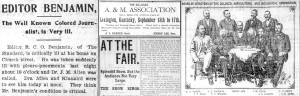
The Black Community News Collection compiles searchable newspaper articles and ads for local Black community events, schools, social gatherings, church events, obituaries, and wedding…
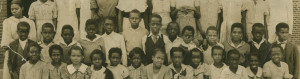
The Brown-Hocker Collection is a community collection of photos and realia from African American events and people in Lexington and Kentucky history.
The objects in the collection are…
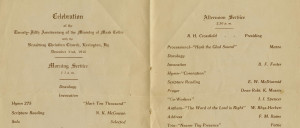
This collection contains materials from Lexington and Fayette County religious groups.
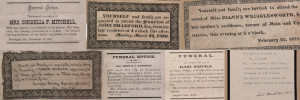
Compiled by Cyrus Parker Jones, a man formerly enslaved by the Parker family, these funeral notices cover 667 funerals of individuals in Lexington, including seven free blacks. The funeral notices…
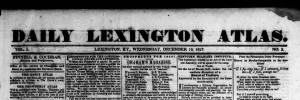
The Daily Lexington Atlas ran from December 11, 1847 through November 20, 1848 and was Lexington’s first daily paper, and the first to publish information from the telegraph lines. It was…
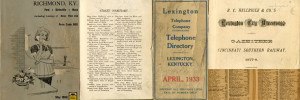
The library has a variety of directories and yearbooks with local information. In the library's current digital collection, there is a selection of residential and street directories, yearbooks,…
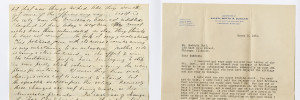
Various objects found in our Duncan-Goff scrapbook collection.
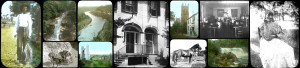
Elmer L. Foote served as official photographer of the Cincinnati Public Library for many years, and produced photographs that appeared in the Cincinnati Commercial Tribune …
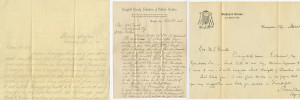
Letters from and/or about Father William T. Punch and the Punch family. Donated by a Lexington resident to Lexington Public Library. Father Punch was instrumental in building…
Until 1974, Lexington and Fayette County had two separate governing bodies. Lexington itself was founded in 1775 and chartered in 1782 by an act of the Virginia General Assembly,…
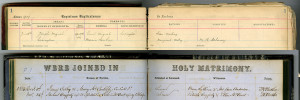
The St. Paul Catholic Church Collection includes materials from the Church's archive. The Roman Catholic church is over 150 years old, and is located on West Short Street, in downtown Lexington.…
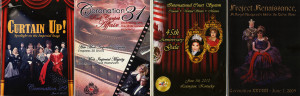
Founded in 1982 by Gigi Galore (Greg Butler) and Blanche Pink (Marlon Austin), the Imperial Court of Kentucky, Inc., is a nonprofit charity that supports the LGBTQ+ community of…
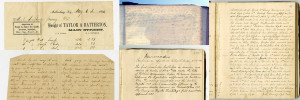
The Judge Kenneth Lyons collection consists of an atlas, a journal, and letters. The atlas features copies of letters written on the blank pages of the atlas. The journal contains family and local…
The Junior League of Lexington (JLL) is a local nonprofit organization of women committed to improving community through volunteerism. The first Junior League was established in 1901…
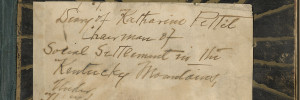
The diary (ca. 1899) of Katherine Pettit, details her settlement work for the Kentucky Confederation of Women's Clubs, made yearly trips to Hazard during this period and was a central figure in…
The Dunn Photograph Collection contains images of Lexington, KY taken in the 1960s and 1980s. Keller J. Dunn (1917-2000) born in Lexington, KY, shot hundreds of pictures of…
The library's collection contains many event pamphlets for Lexington and Kentucky counties, including county anniversary celebrations, suffragette songs, chautauquas, and community events and…
The photographs in the library's collection are donated from a variety of individuals.
The Ashland-McDowell Collection shows an unknown gathering of friends and…
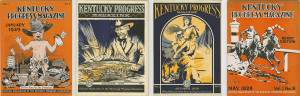
The Kentucky Progress Commission was formed in 1928 in order to draw tourism and business to Kentucky. It was formed by the Kentucky Legislature, and was a 12 person board. The “Kentucky…
The League of Women Voters of Lexington, Kentucky, was established in 1920. It is the local chapter of a national nonpartisan nonprofit organization that encourages informed and…
The Lexington History Museum began in 1998, and opened its doors in the Old Courthouse in 2003. Its purpose is to educate Fayette County about its rich history, and preserve pieces of that history…
The Lexington Public Library opened a Carnegie library in 1905. It incorporated the collections of the former subscription Lexington Library Company (est.1801) and the former…
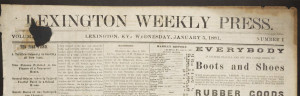
The Lexington Weekly Press was published every Wednesday in Lexington, Kentucky, and contained local, state, and foreign news. The paper focused on Central Kentucky’s “agriculture,…
The military history collection contains relevant histories and records that focus on Kentuckians involved at home and abroad, and includes a collection of United States Army Training Center…
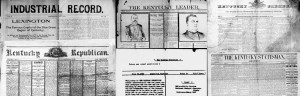
The Micellaneous Newspaper collection combines scattered issues of various historic newspapers in our archive collection.
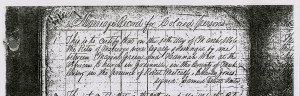
Scans of the Black Marriage records from the Courthouse in Greenville, Kentucky.
The collection contains various postcards featuring places in and around Kentucky and includes a selection donated by the Knowles family. The postcards in the library's collection were donated by…
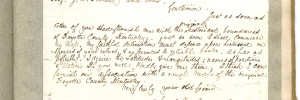
This is a handwritten series of lectures detailing Samuel D. McCullough's memories of his childhood and life in Lexington, Kentucky, accompanied by letters and a photograph of his house. The…
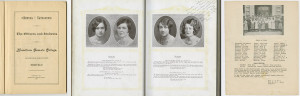
The Schools and Yearbooks collection contains historical and modern yearbooks and other school documents owned by and donated to the Lexington Public Library.
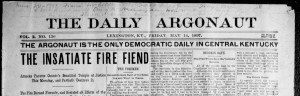
The Daily Argonaut began in 1895 and seems to have ceased publication in 1899. This collection includes scattered issues from 1896, 1897 and 1898. The paper focuses more on sensational news and…
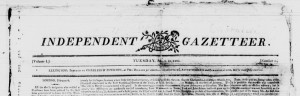
The Independent Gazetteer was founded and printed by James Charless in 1803, with ads appearing in the Kentucky Gazette about its upcoming…

The Kentucky Gazette was the first paper established west of the Allegheny Mountains, founded by John and Fielding Bradford. The frontier paper focused on East Coast and International news,…
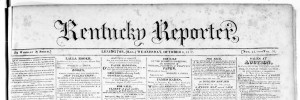
The Kentucky Reporter was published from October 1817-April 1832, by William W. Worsley and Thomas Smith. It is the direct continuation of the The Reporter. Politically, it was a…
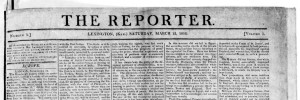
The Reporter was published from March 1808-September 1817, by William W. Worsley. It was a Republican paper (Jeffersonian Democratic Republican - liberal at the time). The paper was published…
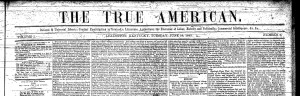
The True American was an anti-slavery newspaper started by Cassius Marcellus Clay in June 1845. He ran the paper in Lexington until August of 1845, when he published an…
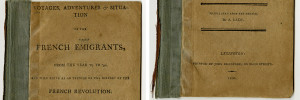
This work contains information about French Emigrants to America over the years 1789-1799, and provides a history of the French Revolution. The work was originally in French, and was translated…
Discover free events, books, and resources exploring Juneteenth, the holiday commemorating when the Emancipation Proclamation reached enslaved people in Galveston, Texas, in 1865.
Please note that all locations will be closed on June 19 in observance.
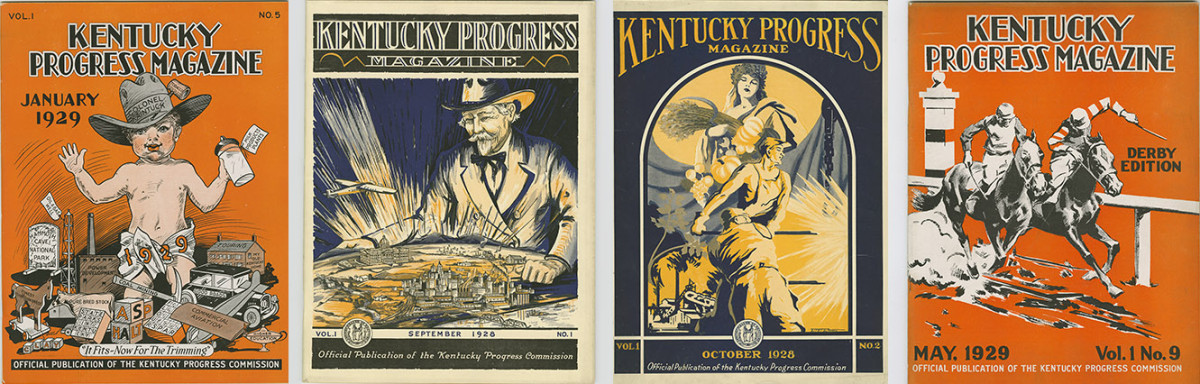
The Kentucky Progress Commission was formed in 1928 in order to draw tourism and business to Kentucky. It was formed by the Kentucky Legislature, and was a 12 person board. The “Kentucky Progress Magazine” was used by the board to promote Kentucky, and features local interest stories, photographs of people, places, and activities. It also features ads placed by various cities around the state. It was published monthly from September 1928 through August 1932, and continued quarterly until the Spring issue of 1936.
Some issues contain material that is under copyright, but qualifies for display by libraries under Section 108(h) of US Copyright Law. It is the user's responsibility to determine the copyright status of the material they want to use.
The first Kentucky almanacs were printed by John Bradford, on the same printing press that published the Kentucky Gazette. The Kentucky almanacs in the library's…
Fayette County's buildings contain a great deal of history about the region and its inhabitants. The earliest structure in Lexington was built in 1779, the Blockhouse. Lexington currently has over…
The collection consists of an image, homemade brochures, flyers, pamphlets, and programs covering LGBTQ+ events and places from 1983 to 1999 in both Lexington and Louisville. Subjects include…
The Bath County Memorial Library was founded in 1949 by the Owingsville Women’s Club, and opened in January, 1950. It expanded into a bookmobile in 1953, and in 1963 moved into the old Farmer’s…
The Black Community News Collection compiles searchable newspaper articles and ads for local Black community events, schools, social gatherings, church events, obituaries, and wedding…
The Brown-Hocker Collection is a community collection of photos and realia from African American events and people in Lexington and Kentucky history.
The objects in the collection are…
This collection contains materials from Lexington and Fayette County religious groups.
Compiled by Cyrus Parker Jones, a man formerly enslaved by the Parker family, these funeral notices cover 667 funerals of individuals in Lexington, including seven free blacks. The funeral notices…
The Daily Lexington Atlas ran from December 11, 1847 through November 20, 1848 and was Lexington’s first daily paper, and the first to publish information from the telegraph lines. It was…
The library has a variety of directories and yearbooks with local information. In the library's current digital collection, there is a selection of residential and street directories, yearbooks,…
Various objects found in our Duncan-Goff scrapbook collection.
Elmer L. Foote served as official photographer of the Cincinnati Public Library for many years, and produced photographs that appeared in the Cincinnati Commercial Tribune …
Letters from and/or about Father William T. Punch and the Punch family. Donated by a Lexington resident to Lexington Public Library. Father Punch was instrumental in building…
Until 1974, Lexington and Fayette County had two separate governing bodies. Lexington itself was founded in 1775 and chartered in 1782 by an act of the Virginia General Assembly,…
The St. Paul Catholic Church Collection includes materials from the Church's archive. The Roman Catholic church is over 150 years old, and is located on West Short Street, in downtown Lexington.…
Founded in 1982 by Gigi Galore (Greg Butler) and Blanche Pink (Marlon Austin), the Imperial Court of Kentucky, Inc., is a nonprofit charity that supports the LGBTQ+ community of…
The Judge Kenneth Lyons collection consists of an atlas, a journal, and letters. The atlas features copies of letters written on the blank pages of the atlas. The journal contains family and local…
The Junior League of Lexington (JLL) is a local nonprofit organization of women committed to improving community through volunteerism. The first Junior League was established in 1901…
The diary (ca. 1899) of Katherine Pettit, details her settlement work for the Kentucky Confederation of Women's Clubs, made yearly trips to Hazard during this period and was a central figure in…
The Dunn Photograph Collection contains images of Lexington, KY taken in the 1960s and 1980s. Keller J. Dunn (1917-2000) born in Lexington, KY, shot hundreds of pictures of…
The library's collection contains many event pamphlets for Lexington and Kentucky counties, including county anniversary celebrations, suffragette songs, chautauquas, and community events and…
The photographs in the library's collection are donated from a variety of individuals.
The Ashland-McDowell Collection shows an unknown gathering of friends and…
The Kentucky Progress Commission was formed in 1928 in order to draw tourism and business to Kentucky. It was formed by the Kentucky Legislature, and was a 12 person board. The “Kentucky…
The League of Women Voters of Lexington, Kentucky, was established in 1920. It is the local chapter of a national nonpartisan nonprofit organization that encourages informed and…
The Lexington History Museum began in 1998, and opened its doors in the Old Courthouse in 2003. Its purpose is to educate Fayette County about its rich history, and preserve pieces of that history…
The Lexington Public Library opened a Carnegie library in 1905. It incorporated the collections of the former subscription Lexington Library Company (est.1801) and the former…
The Lexington Weekly Press was published every Wednesday in Lexington, Kentucky, and contained local, state, and foreign news. The paper focused on Central Kentucky’s “agriculture,…
The military history collection contains relevant histories and records that focus on Kentuckians involved at home and abroad, and includes a collection of United States Army Training Center…
The Micellaneous Newspaper collection combines scattered issues of various historic newspapers in our archive collection.
Scans of the Black Marriage records from the Courthouse in Greenville, Kentucky.
The collection contains various postcards featuring places in and around Kentucky and includes a selection donated by the Knowles family. The postcards in the library's collection were donated by…
This is a handwritten series of lectures detailing Samuel D. McCullough's memories of his childhood and life in Lexington, Kentucky, accompanied by letters and a photograph of his house. The…
The Schools and Yearbooks collection contains historical and modern yearbooks and other school documents owned by and donated to the Lexington Public Library.
The Daily Argonaut began in 1895 and seems to have ceased publication in 1899. This collection includes scattered issues from 1896, 1897 and 1898. The paper focuses more on sensational news and…
The Independent Gazetteer was founded and printed by James Charless in 1803, with ads appearing in the Kentucky Gazette about its upcoming…
The Kentucky Gazette was the first paper established west of the Allegheny Mountains, founded by John and Fielding Bradford. The frontier paper focused on East Coast and International news,…
The Kentucky Reporter was published from October 1817-April 1832, by William W. Worsley and Thomas Smith. It is the direct continuation of the The Reporter. Politically, it was a…
The Reporter was published from March 1808-September 1817, by William W. Worsley. It was a Republican paper (Jeffersonian Democratic Republican - liberal at the time). The paper was published…
The True American was an anti-slavery newspaper started by Cassius Marcellus Clay in June 1845. He ran the paper in Lexington until August of 1845, when he published an…
This work contains information about French Emigrants to America over the years 1789-1799, and provides a history of the French Revolution. The work was originally in French, and was translated…
Join us for a walking tour of downtown Lexington's most notorious places! The full tour is available as a single MP3, or you can download individual tracks. For the single MP3, music will play between the stops. You can pause the track while you walk between stops.
Please Note: Some Listener's Discretion is advised.
This tour covers a walking distance of 1.43 miles.
The music clips used in this tour are from “Walking Barefoot on Grass” by Kai Engel, and are used with a CCBY license. It is available here.
Join us for a walking tour of downtown Lexington's most notorious places! The full tour is available as a single MP3, or you can download individual tracks. For the single MP3, music will play between the stops.
Check for current job openings and apply to work at the Lexington Public Library.
Amended and Restated Bylaws of the Friends of the Lexington Public Library, Inc.
The William Stamps Farish Fund Theater is a state-of-the-art facility in one of Main Street’s busiest places.
Fully renovated and updated, the theater on the Central Library’s first floor is home to theater, dance, live music, film, community events, and meetings. The Lexington Public Library makes the facility available at some of the city’s best prices, with affordable business, nonprofit, and government rates.
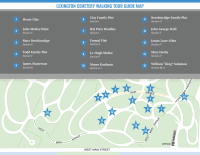
Join us for a walking tour of Lexington's Historic Lexington Cemetery. The full tour is available as a single MP3, or you can download individual tracks. For the single MP3, music will play between the stops. You can pause the track while you walk between stops.
This tour covers a walking distance of approximately 1.5 miles.
Please note: You will be walking on paths also used by cars. Please take special care to watch and listen for approaching vehicles.
The music clips used in this tour are from “Walking Barefoot on Grass” by Kai Engel, and are used with a CCBY license. It is available here: http://freemusicarchive.org/music/Kai_Engel/
Join us for a walking tour of Lexington's Historic Lexington Cemetery. The full tour is available as a single MP3, or you can download individual tracks. For the single MP3, music will play between the stops.
The Lexington Public Library has made an effort to ensure that all of our digital collections are public domain, or that we have gotten approval from the copyright holders to display their work. Most - but not all - of these collections, to the best of our knowledge, have no known US copyright restrictions. Some items in the collection are under copyright but qualify for online display by libraries under Section 108(h) of United States Copyright Law. Some of the collections provided in the Library's Digital Archives are made available under an assertion of fair use, which does not necessarily apply to an individual's use of them.
With your free library card, gain access to a diverse collection of print books, ebooks, audiobooks, online classes and databases, and more. You can apply for a traditional, wallet-sized card and key chain tag or a digital library card to add to your smartphone’s digital wallet (iOS and Android compatible).
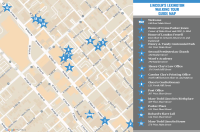
Join us for a walking tour highlighting Lexington's unique role in Abraham Lincoln's life.
Tour Length: 1.42 miles
This tour is adapted from the 2009 Tour created in celebration of the 200th anniversary of Lincoln's birth by a partnership between the Lexington Public Library, the Isaac Scott Hathaway Museum, and the Mary Todd Lincoln House.
The music clips used in this tour are from “Walking Barefoot on Grass” by Kai Engel, and are used with a CCBY license. It is available here.
Join us for a walking tour highlighting Lexington's unique role in Abraham Lincoln's life.
Tour Length: 1.42 miles
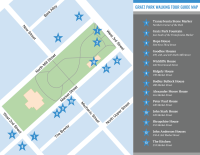
Join us for a walking tour Lexington's Gratz Park Historic District. The full tour is available as a single MP3, or you can download individual tracks. For the single MP3, music will play between the stops. You can pause the track while you walk between stops.
This tour covers a walking distance of 0.4 miles.
The music clips used in this tour are from “Walking Barefoot on Grass” by Kai Engel, and are used with a CCBY license. It is available here: http://freemusicarchive.org/music/Kai_Engel/
Join us for a walking tour Lexington's Gratz Park Historic District. The full tour is available as a single MP3, or you can download individual tracks. For the single MP3, music will play between the stops.
Meet the Lexington Public Library's Board, Administrative Team, and Leadership Team. Apply to work or volunteer at the library.
Several pieces of equipment require additional supplies such as PLA filament, vinyl, and metal backings. Some supplies are available for purchase in our learning spaces. Customers ages 13 and up who have signed the Experiential Learning Agreement and Equipment Use Policy, which is available to sign in-person at any of the four learning spaces, and live in Fayette County or a reciprocal county receive an $8 credit each month for material purchases. If you exceed this credit, you can still purchase additional supplies using credit, Mobile App Pay or Mobile Pay, or tapping to pay.
The Central Kentucky Cemeteries Maps are powered by Google Maps. Counties include: Fayette, Bourbon, Clark, Garrard, Harrison, Jessamine, Lincoln, Madison, Mercer, Montgomery, Nicholas, Powell, Scott, and Woodford.
The 1795 Society is a community of donors whose leadership gifts strengthen Lexington Public Library’s ability to serve, inspire, and connect our neighbors. Named for the year the library was first imagined in Lexington, the society honors those who invest in a legacy of learning, access, and opportunity for generations to come.