






Website Search
Displaying results 76 - 100 of 141
Join us for Kentucky Legends: a series of programs exploring Kentucky culture, history, and lore. Programs include author visits, Chautauqua performances, live music, activities and crafts, and more.
The Lexington Public Library is home to four collaborative creative spaces for making, learning, exploring, and sharing. These spaces offer a variety of events, high-tech and low-tech equipment for patron use, and serve as a space to build community, explore your creativity, and develop personal interests.
Sample projects
Film a music video, 3D print a fidget toy, digitize old family photos, sew a costume or mend your favorite pair of pants, embroider a t-shirt, comb bind a book, start a podcast, record in the audio booth, create content with the green screen, make custom magnets or buttons, engrave a keychain, print a poster, make custom stickers, and more.
A copy of the draft of Lexington-Fayette Urban County Government Grantee Performance Reports for the community Development Block Grant Program, HOME Investment Partnerships Program and the Emergency Solutions Grants Program will be available on the government's web page at https://www.lexingtonky.gov/consolidated-plan. The draft report is also posted on the public library's website for review.
All databases are available from this page.
Throughout June, join us as we celebrate Pride Month with programs, books, podcasts, and more.
Find out what's happening at our locations. Browse upcoming events and discover our dedicated learning spaces. Reserve a meeting room. Explore our galleries and special collections.
Gallery
Central Library Main Gallery (1st Floor)
Exhibit Dates
-
Presented by Arts Connect
The Materials Selection Policy was initially adopted February 25, 1987 by the Lexington Public Library Board of Trustees and was revised March 24, 1993. The Materials Selection Policy was updated and renamed the Collection Development Policy which was approved by the Board on January 14, 2009. The Board of Trustees assumes full responsibility for all legal actions which may result from the implementation of any policies stated herein.
Read articles from magazines and journals, learn a new language, or locate a newspaper article. These resources can't be found with a search engine but are available for free with your library card.
This is your gateway to our most popular resources. Search for books and eBooks, access tools for research and learning, and discover our unique collection of genealogy and local history materials.
Thank you for thinking of the Friends Book Cellar for donating your: books, CDs, DVDs, and current year magazines.
When you log into many of our services, you'll be asked to provide a PIN (Personal Identification Number) in addition to your library card number. Your default PIN is typically the last 4 digits of the phone number on file for your account.
Walking Tour
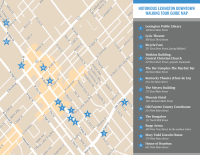
Join us for a walking tour of downtown Lexington's most notorious places! The full tour is available as a single MP3, or you can download individual tracks. For the single MP3, music will play between the stops. You can pause the track while you walk between stops.
Please Note: Some Listener's Discretion is advised.
This tour covers a walking distance of 1.43 miles.
The music clips used in this tour are from “Walking Barefoot on Grass” by Kai Engel, and are used with a CCBY license. It is available here.
Join us for a walking tour of downtown Lexington's most notorious places! The full tour is available as a single MP3, or you can download individual tracks. For the single MP3, music will play between the stops.
National Library Card Sign-Up Month is an annual invitation to discover (or rediscover) all that a free library card has to offer. This year, with support from local business partners, your library card can also get you great deals at participating shops and restaurants throughout September.
The Kloiber Foundation STEAM Lab, located on the fourth floor of Central Library at 140 East Main Street, is a space for youth and families to explore and create using resources and programs related to Science, Technology, Engineering, Art, and Math (STEAM). Customers ages 7 and under must be accompanied by a responsible caregiver. Planning to bring a group of 10 or more? Please contact us by calling 859-231-5500 ext.1147 or using the link below.
Recurring programs
Lego Club, Maker Station, and Open STEAM Play sessions are available for children and families. The STEAM Lab also hosts weekly drop-in events, Homeschool STEAM activities, and special programming during school breaks. Check out the upcoming events listed below.

Board of Trustees
Secretary
Yajaira Aich West is a Vice President at PNC Bank and serves as the Director of Client and Community Relations for central, eastern and southeast Kentucky.
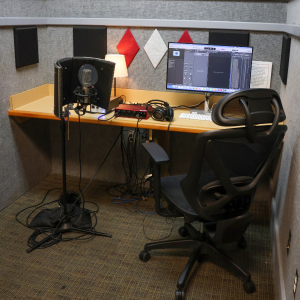
Audio booths are outfitted with a microphone, computer, headphones, and other recording equipment and software.
Musical instruments are available at the Northside Digital Studio audio booth. 32 GB flash drives are available for purchase at the Digital Studio, but you may need to bring additional storage depending on the size of the project.
Have a question? Ask us! You can contact us via email, phone, chat, or text. Book a librarian for one-on-one help. Suggest a purchase to help us improve our collection.
The Marksbury Family Branch Makerspace, located at 2197 Versailles Road, is an inclusive space where customers of all ages can come to learn, create, and explore together, free of charge. Outfitted with current high-tech and low-tech tools, the Makerspace is designed to promote education and cultivate a do-it-yourself spirit for the whole family. Customers ages 7 and under must be accompanied by a responsible caregiver. Planning to bring a group of 10 or more? Please contact us by calling 859-231-5500 ext.2822 or using the link below.
Sample projects
Engrave a bookmark for your next read, design matching t-shirts for your family vacation, personalize a coffee mug, embroider a t-shirt, or print fun stickers for your new business.
Download eBooks, audiobooks, magazines, and more – free with your library card.
The Eastside Branch Makerspace, located at 3000 Blake James Drive, is a collaborative workspace for ages 13 and up to make, learn , explore, and share, free of charge. Staff are available during open studio hours to assist in projects of all kinds, or contact Makerspace staff to schedule one-on-one help. Not sure where to start? The Eastside Makerspace also offers regular workshops that introduce participants to new skills, technology, and equipment. Planning to bring a group of 10 or more? Please contact us by calling 859-231-5500 ext.2207 or using the link below.
Sample projects
Engrave a welcome sign, 3D print a business card holder, laminate a sign for your classroom, print a banner for your next event, make a personalized magnet for your refrigerator, sew a quilt block, or cut a vinyl design for your water bottle.
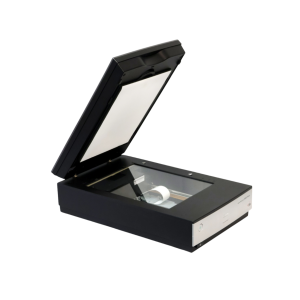
Use these to scan and digitize documents, family photographs, and other print items.
The Northside Digital Studio has 32 GB flash drives that are available for purchase, but you may need to bring additional storage depending on the size of the project.