








Website Search
Search Website
Displaying results 2426 - 2450 of 3447
Mariam interviews artist and activist Robert Morgan about his life with the internationally known queer Kentucky artist, Henry Faulkner.
Mariam interviews Terry L. Birdwhistell and Donald A. Ritchie about their January 2022 book, “Washington’s Iron Butterfly: Bess Clements Abell, an Oral History.”
Mariam interviews Ruth Gaylord about her life and work as Lexington Public Library’s first African American librarian.
Mariam interviews Wayne Johnson about Lucille Caudill Little's kidnapping in 1979.
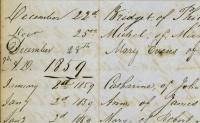
St. Paul Catholic Church is one of the oldest existing churches in Lexington. The records for the parish go back to 1854. The ledgers are part of the church's historical archive, and contain unique records for Lexington's history.
Mariam discusses the life of Margaret Garner, the real life Kentucky Woman who inspired Toni Morrison’s novel, Beloved. This episode may be difficult for some listeners to hear, listener’s discretion is advised.
Starting your own business or nonprofit is hard work, but we can help you locate the tools you need to get your ideas off the ground.
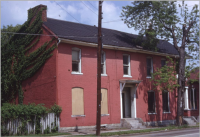
The Dunn Photograph Collection contains images of Lexington, KY taken in the 1960s and 1980s. Keller J.
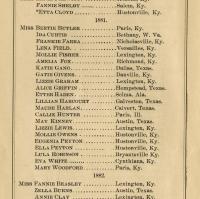
The library has a variety of directories and yearbooks with local information. In the library's current digital collection, there is a selection of residential and street directories, yearbooks, school directories, and organizational directories. These are all fully word-searchable.
The Hamilton Female College catalogs list the school’s Board of Trustees, faculty, alumnae, graduates that year, directory of students, courses of study, and the members of each department.
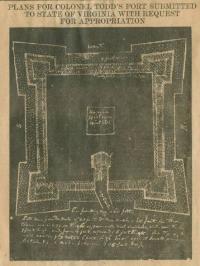
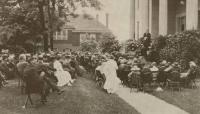
In 1917, the Woman’s Club of Central Kentucky hosted a series of speakers giving historical sketches on people and places of local interest.
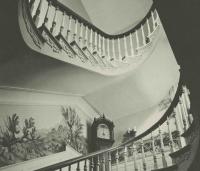
Old Homes of the Blue Grass is a photographic review of historic homes in Kentucky’s Blue Grass region.
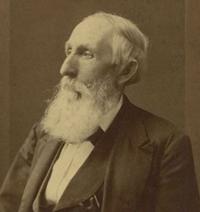
The Lexington Public Library opened a Carnegie library in 1905. It incorporated the collections of the former subscription Lexington Library Company (est.1801) and the former Transylvania Library (est.1795).
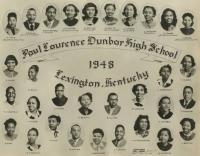
Dunbar High School opened in 1923 at 545 North Upper Street as the only all-black high school in Lexington’s city school system.
The Lexington Musicians' Association is the local chapter of the American Federation of Musicians (Local 554-635) and was chartered in 1910.
In 1768, Lewis Craig and other members of the Spotsylvania Baptist Church were arrested for preaching without a license issued by the Church of England. Their case was later defended by Patrick Henry.
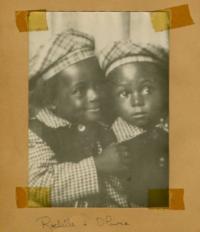
The loose scrapbook pages were given to the library, since the original owner is not known.
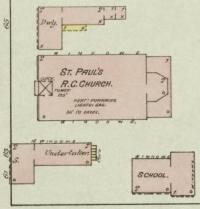
St. Paul the Apostle Roman Catholic Church was formally created in the Covington Diocese in 1868, by Father John Bekkers.
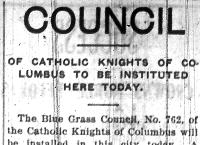
The Knights of Columbus is a fraternal Catholic service organization begun in the 1880s. In 1903, the local Bluegrass Council 762 became the third chapter in Kentucky, and it acquired its 4th degree status in 1920.
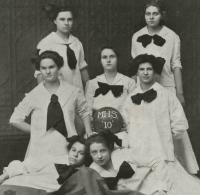
The Morton School Number 1, Lexington’s first public city school in 1834, was originally built on the corner of Walnut (later Martin Luther King Dr.) and Short Street.
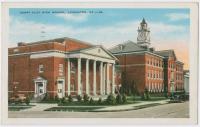
Lexington's school system dates back to the city charter of 1831, and it first school opened in 1834.
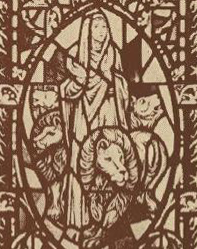
Fayette County churches contain some of the earliest records and information preserved about central Kentucky history. The digital archive contents include church ledgers, minutes, directories, and informational brochures.