








Website Search
Search Website
Displaying results 1476 - 1500 of 3207
Creator
Thomas Smith
Date
Description
The Kentucky Reporter is the weekly continuation of The Reporter, which changed names in October 1817. It reports on local and national news.
Publisher
Thomas Smith
Rights
The Lexington Public Library believes this item is in the public domain and has no known US Copyright restrictions; however, it may be subject to rights of privacy, publicity, or other restrictions.
Use and reproduction restrictions Though not required, we would greatly appreciate our collection users to credit us as the source. Please use the following statement, "Courtesy of the Lexington Public Library," and provide a link back to the item or collection on our Digital Collections site, www.lexpublib.org/digital-archives. Doing so helps us track how our collections are used and helps justify freely releasing more content in the future. Please contact the library at elibrarian@lexpublib.org for permission questions, collection information, and higher resolution image requests.
CONTENTdm Identifier
3050
Parent Collection
Creator
Thomas Smith
Date
Description
The Kentucky Reporter is the weekly continuation of The Reporter, which changed names in October 1817. It reports on local and national news.
Publisher
Thomas Smith
Rights
The Lexington Public Library believes this item is in the public domain and has no known US Copyright restrictions; however, it may be subject to rights of privacy, publicity, or other restrictions.
Use and reproduction restrictions Though not required, we would greatly appreciate our collection users to credit us as the source. Please use the following statement, "Courtesy of the Lexington Public Library," and provide a link back to the item or collection on our Digital Collections site, www.lexpublib.org/digital-archives. Doing so helps us track how our collections are used and helps justify freely releasing more content in the future. Please contact the library at elibrarian@lexpublib.org for permission questions, collection information, and higher resolution image requests.
CONTENTdm Identifier
1190
Parent Collection
Creator
Thomas Smith
Date
Description
The Kentucky Reporter is the weekly continuation of The Reporter, which changed names in October 1817. It reports on local and national news.
Publisher
Thomas Smith
Rights
The Lexington Public Library believes this item is in the public domain and has no known US Copyright restrictions; however, it may be subject to rights of privacy, publicity, or other restrictions.
Use and reproduction restrictions Though not required, we would greatly appreciate our collection users to credit us as the source. Please use the following statement, "Courtesy of the Lexington Public Library," and provide a link back to the item or collection on our Digital Collections site, www.lexpublib.org/digital-archives. Doing so helps us track how our collections are used and helps justify freely releasing more content in the future. Please contact the library at elibrarian@lexpublib.org for permission questions, collection information, and higher resolution image requests.
CONTENTdm Identifier
3695
Parent Collection
Creator
Thomas Smith
Date
Description
The Kentucky Reporter is the weekly continuation of The Reporter, which changed names in October 1817. It reports on local and national news.
Publisher
Thomas Smith
Rights
The Lexington Public Library believes this item is in the public domain and has no known US Copyright restrictions; however, it may be subject to rights of privacy, publicity, or other restrictions.
Use and reproduction restrictions Though not required, we would greatly appreciate our collection users to credit us as the source. Please use the following statement, "Courtesy of the Lexington Public Library," and provide a link back to the item or collection on our Digital Collections site, www.lexpublib.org/digital-archives. Doing so helps us track how our collections are used and helps justify freely releasing more content in the future. Please contact the library at elibrarian@lexpublib.org for permission questions, collection information, and higher resolution image requests.
CONTENTdm Identifier
1378
Parent Collection
Creator
Thomas Smith
Date
Description
The Kentucky Reporter is the weekly continuation of The Reporter, which changed names in October 1817. It reports on local and national news.
Publisher
Thomas Smith
Rights
The Lexington Public Library believes this item is in the public domain and has no known US Copyright restrictions; however, it may be subject to rights of privacy, publicity, or other restrictions.
Use and reproduction restrictions Though not required, we would greatly appreciate our collection users to credit us as the source. Please use the following statement, "Courtesy of the Lexington Public Library," and provide a link back to the item or collection on our Digital Collections site, www.lexpublib.org/digital-archives. Doing so helps us track how our collections are used and helps justify freely releasing more content in the future. Please contact the library at elibrarian@lexpublib.org for permission questions, collection information, and higher resolution image requests.
CONTENTdm Identifier
2656
Parent Collection
Creator
Thomas Smith
Date
Description
The Kentucky Reporter is the weekly continuation of The Reporter, which changed names in October 1817. It reports on local and national news.
Publisher
Thomas Smith
Rights
The Lexington Public Library believes this item is in the public domain and has no known US Copyright restrictions; however, it may be subject to rights of privacy, publicity, or other restrictions.
Use and reproduction restrictions Though not required, we would greatly appreciate our collection users to credit us as the source. Please use the following statement, "Courtesy of the Lexington Public Library," and provide a link back to the item or collection on our Digital Collections site, www.lexpublib.org/digital-archives. Doing so helps us track how our collections are used and helps justify freely releasing more content in the future. Please contact the library at elibrarian@lexpublib.org for permission questions, collection information, and higher resolution image requests.
CONTENTdm Identifier
3600
Parent Collection
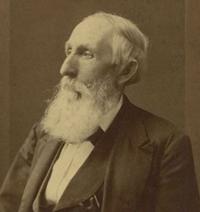
The Lexington Public Library opened a Carnegie library in 1905. It incorporated the collections of the former subscription Lexington Library Company (est.1801) and the former Transylvania Library (est.1795).
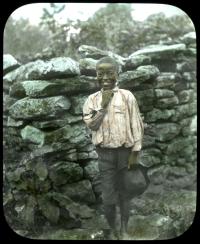
Elmer L. Foote served as official photographer of the Cincinnati Public Library for many years, and produced photographs that appeared in the Cincinnati Commercial Tribune during the early years of the twentieth century.
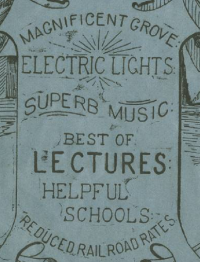
The Kentucky Chautauqua Assembly presented an annual event in Lexington’s Woodland Park with days of programming. Presentations varied from live music and entertainment to lectures and speeches from national figures.
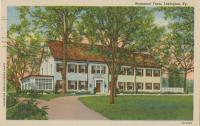
The Kentucky Postcard collection contains images of well-known sites in Central Kentucky, such as Keeneland, Transylvania University, Ashland, and many others.
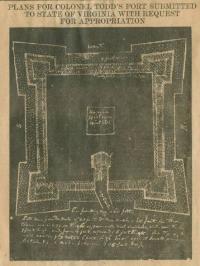
In 1917, the Woman’s Club of Central Kentucky hosted a series of speakers giving historical sketches on people and places of local interest.
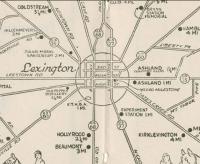
The Kentucky Room's collections contain Lexington's residential directories going back over 200 years, and are some of the most useful resources for researchers looking for family information, neighborhood histories, and house histories.
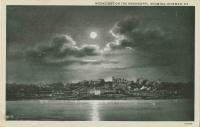
The Knowles Postcard Collection contains images of notable Kentucky locations, such as Ashland, Keeneland, and Mammoth Cave, as well as county courthouses, farms, schools, and many others.
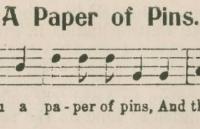
The Kentucky Rally Songs pamphlet contains 42 songs compiled and printed by the state chapter of the Woman’s Christian Temperance Union, to be used at the many gatherings and rallies that they organized in the late 19th and ea
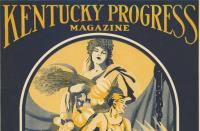
The Kentucky Progress Commission was formed in 1928 in order to draw tourism and business to Kentucky. It was formed by the Kentucky Legislature, and was a 12 person board.
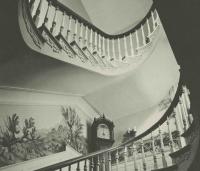
Old Homes of the Blue Grass is a photographic review of historic homes in Kentucky’s Blue Grass region.
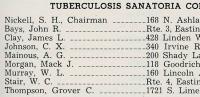
The Kentucky Mountain Club was founded in 1929 as a social organization for residents of Lexington, Kentucky, who had been born or resided in the counties of eastern Kentucky.

The loose scrapbook pages were given to the library, since the original owner is not known.
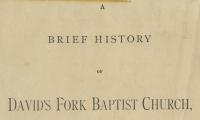
In 1768, Lewis Craig and other members of the Spotsylvania Baptist Church were arrested for preaching without a license issued by the Church of England. Their case was later defended by Patrick Henry.

The Lexington Musicians' Association is the local chapter of the American Federation of Musicians (Local 554-635) and was chartered in 1910.
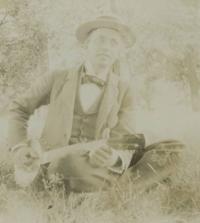
Major Henry Clay McDowell purchased the Ashland Estate from Kentucky University in 1882 with his wife, Anne Smith Clay McDowell, who was a granddaughter of Henry Clay. The McDowells took great care to revive the grounds to their fo
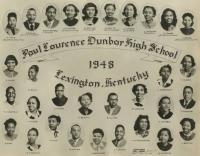
Dunbar High School opened in 1923 at 545 North Upper Street as the only all-black high school in Lexington’s city school system.
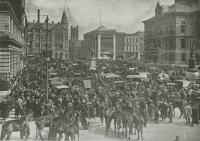
Illustrated Lexington Kentucky contains photographs, demographics, commerce and financial information about Lexington up to 1919.
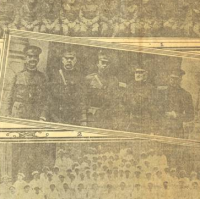
The Council of Defense books contain records for Fayette County’s Army soldiers, Navy sailors, Marines, and Army nurses in World War I, and include information regarding the person’s residence, birth place and date, specific units and en
Mountain Ballads for Social Singing contains 15 songs selected for the Vesper Hour gatherings at Berea College.