








Website Search
Search Website
Displaying results 501 - 525 of 658
Walking Tour
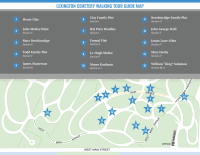
Join us for a walking tour of Lexington's Historic Lexington Cemetery. The full tour is available as a single MP3, or you can download individual tracks. For the single MP3, music will play between the stops. You can pause the track while you walk between stops.
This tour covers a walking distance of approximately 1.5 miles.
Please note: You will be walking on paths also used by cars. Please take special care to watch and listen for approaching vehicles.
The music clips used in this tour are from “Walking Barefoot on Grass” by Kai Engel, and are used with a CCBY license. It is available here: http://freemusicarchive.org/music/Kai_Engel/
Join us for a walking tour of Lexington's Historic Lexington Cemetery. The full tour is available as a single MP3, or you can download individual tracks. For the single MP3, music will play between the stops.
Walking Tour
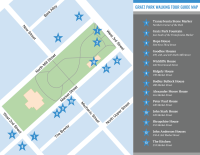
Join us for a walking tour Lexington's Gratz Park Historic District. The full tour is available as a single MP3, or you can download individual tracks. For the single MP3, music will play between the stops. You can pause the track while you walk between stops.
This tour covers a walking distance of 0.4 miles.
The music clips used in this tour are from “Walking Barefoot on Grass” by Kai Engel, and are used with a CCBY license. It is available here: http://freemusicarchive.org/music/Kai_Engel/
Join us for a walking tour Lexington's Gratz Park Historic District. The full tour is available as a single MP3, or you can download individual tracks. For the single MP3, music will play between the stops.
Mariam and Wayne discuss the 1968 removal of the railroad tracks from Downtown Lexington in time for the 50th
Walking Tour
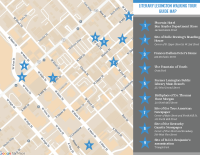
Join us for a walking tour of Lexington’s literary history!
Tour Length 1.05 miles
The music clips used in this tour are from “Walking Barefoot on Grass” by Kai Engel, and are used with a CCBY license. It is available here.
Join us for a walking tour of Lexington’s literary history!
Tour Length 1.05 miles
Learn more about Fayette County and our rich history with the Kentucky Room's Digital Archives. Search photo collections, historical newspapers and publications, and community collections with a simple search. New material is continually being scanned and added.
-
Tates Creek Branch - Large Meeting Room
Gardening for Mental Health presented by the Master Gardeners.


Jennifer hosts a staff discussion of the Lexington Public Library’s Community Read, The Sum of Us by Heather McGhee. Erin interviews AnnaMarie about DEI at the library.
Mariam interviews Dr. Jonathan Coleman about the founding of the Faulkner Morgan Pagan Babies Archive and the upcoming “Out in Plain Sight” exhibit at Lexington Public Library.
Webform
You can request a "Bag of Books" to access our materials when you're unable to browse in person. Complete this form, and we'll pull up to 10 items that match your specified interests. You can help us locate more items by keeping your requests general.
Jennifer talks with local poet Danni Quintos about her work and latest book release Two Brown Dots. In Behind the Scenes, Erin hears from librarians Jennie and Mary about LPL After School. Danni closes the podcast with a reading from Two Brown Dots.
Jennifer welcomes back Lynn Hightower to discuss more about her book The Enlightenment Project and her own experiences with the supernatural. Lynn closes the podcast with a reading from The Enlightenment Project.
Mariam and Erin tell the story of Constantine Samuel Rafinesque’s visit with naturalist John James Audubon, and how the resulting prank by Audubon on Rafinesque wasn’t fully discovered for nearly 150 years.
Mariam interviews Dr. Jonathan Coleman, head curator of the Mary Todd Lincoln House, about her life in Lexington, the White House, and after the assassination. They also discuss the collections and events at the Mary Todd Lincoln House museum.
Erin guests to tell the story of one of Lexington’s oldest unsolved murders – the killing of Alexander T. Hays in October 1846.
Mariam interviews Terry Foody, author of The Cherokee and the Newsman: Kinsmen in Words. They discuss Ms. Foody’s inspiration to write about the two men, their family lives, and how their words contributed to their communities.
Mariam interviews Wayne Johnson about the murder of golfing great Marion Miley in Lexington, KY in 1941. This is part two of a two part series.
Mariam interviews Wayne Johnson, librarian and local historian about the murder of Transylvania University student Betty Gail Brown in October 1961. In the first episode, Wayne and Mariam discuss the events leading up to the crime.
Mariam interviews Reinette Jones, founder of the Notable Kentucky African Americans database. They discuss Kentucky’s Centenarian Librarians, the boxer David Moore, and the prison shoe-making industry. Visit the NKAA at http://nkaa.uky.edu/nkaa/
Mariam interviews Doug Tattershall, author of Belle Brezing: American Magdalene, about his book. They discuss Belle Brezing’s early life, her years as the nationally known brothel owner, and the generally unknown final years of her life in seclusion.
Jennifer talks with local author Kaitlyn Hill about her debut YA novel “Love from Scratch” and her journey in publishing. For Behind the Scenes, Erin talks with Amanda Wheeler and Bryan Klausing about the library’s experiential learning spaces and program
Mariam interviews Wayne Johnson about the murder of golfing great Marion Miley in Lexington, KY in 1941. They discuss Marion Miley’s life, and the events leading up to her death. This is part one of a two part series.