








Website Search
Search Website
Displaying results 2426 - 2450 of 3344
Mariam discusses the life of Margaret Garner, the real life Kentucky Woman who inspired Toni Morrison’s novel, Beloved. This episode may be difficult for some listeners to hear, listener’s discretion is advised.
Starting your own business or nonprofit is hard work, but we can help you locate the tools you need to get your ideas off the ground.
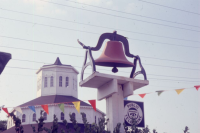
The Fayette County Images contains photographs of Lexington and Fayette County Kentucky.
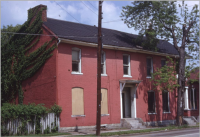
The Dunn Photograph Collection contains images of Lexington, KY taken in the 1960s and 1980s. Keller J.
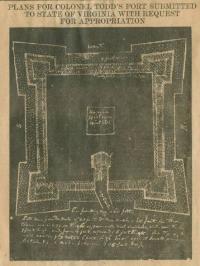
The Hamilton Female College catalogs list the school’s Board of Trustees, faculty, alumnae, graduates that year, directory of students, courses of study, and the members of each department.
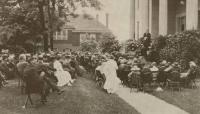
In 1917, the Woman’s Club of Central Kentucky hosted a series of speakers giving historical sketches on people and places of local interest.
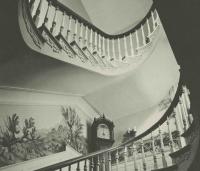
Old Homes of the Blue Grass is a photographic review of historic homes in Kentucky’s Blue Grass region.
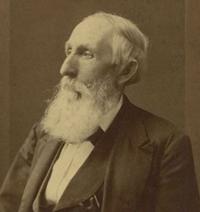
The Lexington Public Library opened a Carnegie library in 1905. It incorporated the collections of the former subscription Lexington Library Company (est.1801) and the former Transylvania Library (est.1795).
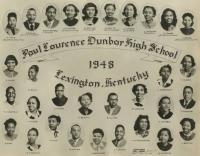
Dunbar High School opened in 1923 at 545 North Upper Street as the only all-black high school in Lexington’s city school system.
The Lexington Musicians' Association is the local chapter of the American Federation of Musicians (Local 554-635) and was chartered in 1910.
In 1768, Lewis Craig and other members of the Spotsylvania Baptist Church were arrested for preaching without a license issued by the Church of England. Their case was later defended by Patrick Henry.
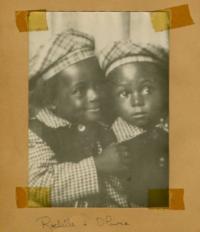
The loose scrapbook pages were given to the library, since the original owner is not known.
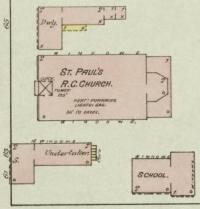
St. Paul the Apostle Roman Catholic Church was formally created in the Covington Diocese in 1868, by Father John Bekkers.
The Knights of Columbus is a fraternal Catholic service organization begun in the 1880s. In 1903, the local Bluegrass Council 762 became the third chapter in Kentucky, and it acquired its 4th degree status in 1920.
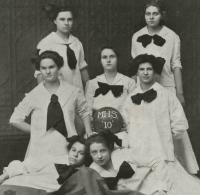
The Morton School Number 1, Lexington’s first public city school in 1834, was originally built on the corner of Walnut (later Martin Luther King Dr.) and Short Street.
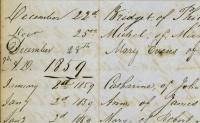
St. Paul Catholic Church is one of the oldest existing churches in Lexington. The records for the parish go back to 1854. The ledgers are part of the church's historical archive, and contain unique records for Lexington's history.
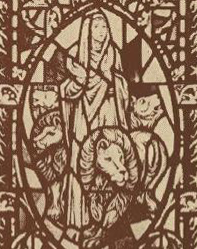
Fayette County churches contain some of the earliest records and information preserved about central Kentucky history. The digital archive contents include church ledgers, minutes, directories, and informational brochures.
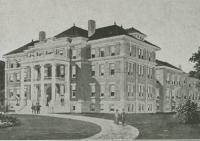
Fayette County's buildings contain a great deal of history about the region and its inhabitants.
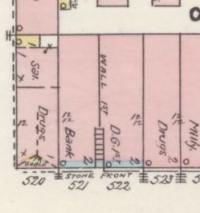
The Bath County Memorial Library was founded in 1949 by the Owingsville Women’s Club, and opened in January, 1950. It expanded into a bookmobile in 1953, and in 1963 moved into the old Farmer’s Bank Building at 24 W. Main St.
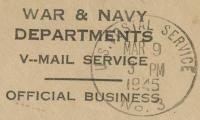
Johnston Albert Young III, was born on May 25, 1924, to Johnston and Lillian Shrout Young. Johnston Young’s father died on November 30, 1938, when he was 14. He served in the US Army from April 1943 to January 1946.
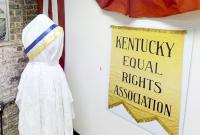
The Lexington History Museum began in 1999, and opened its doors in the Old Courthouse in 2003. Its purpose is to educate Fayette County about its rich history, and preserve pieces of that history for future generations.
Digital Archives - Collection
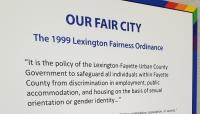
In the summer of 2019, the Lexington History Museum exhibited a 20th anniversary timeline and historical materials exhibit titled, Our Fair City: the 1999 Lexington Fairness Ordinance.
The city reports and ordinances for Lexington contain a wide variety of information about the people, infrastructure, and businesses.