








Website Search
Search Website
Displaying results 726 - 750 of 3271
Located on the fourth floor of the Central Library, this space invites children and students to learn about Science, Technology, Engineering, Arts, and Math through hands-on experiences. Programming events targeted toward upper elementary and middle-school aged students include circuits, robotics, augmented and virtual reality, coding, 3D printing, recording in the audio booth, and so much more.
In this episode we'll talk about the events that happen in pages 80-160. There is more information for us in this section about the circumstances surrounding Tariq's death and the investigation that followed. We'll talk about that, plus new developments w
Subscribe to receive library news in your email inbox.
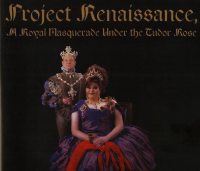
Founded in 1982 by Gigi Galore (Greg Butler) and Blanche Pink (Marlon Austin), the Imperial Court of Kentucky, Inc., is a nonprofit charity that supports the LGBTQ+ community of Kentucky “one dollar at a time” through drag shows, socia

The Kentucky Reporter was published from October 1817-April 1832, by William W. Worsley and Thomas Smith. It is the direct continuation of the The Reporter.

The Kentucky Pioneer Genealogy and Records Magazine published various articles about early Kentucky history as a quarterly publication from 1979-1985, then annually 1986-1988.
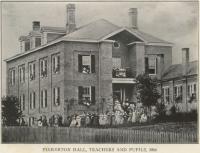
While the focus of content in the digital archive is Fayette County, many other counties are represented. This list is in alphabetical order by county name for non-Fayette County content.
Anderson County
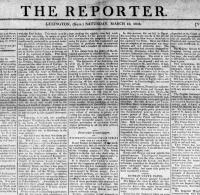
The Reporter was published from March 1808-September 1817, by William W. Worsley. It was a Republican paper (Jeffersonian Democratic Republican - liberal at the time).
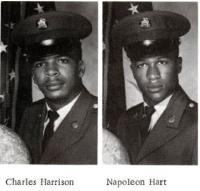
The United States Army Armor School began in 1940 as the Armored Force School and Replacement Center at Fort Knox, Kentucky.

Lena Hart Tobey (1869-1939) was born in Mississippi to Thomas and Susan Watson Hart. In the 1890s, she attended school in Lexington, Kentucky. She married Ellis Tobey in 1896 and died in 1939 in Arkansas.
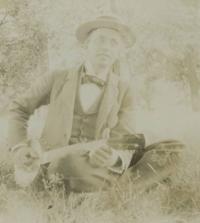
Major Henry Clay McDowell purchased the Ashland Estate from Kentucky University in 1882 with his wife, Anne Smith Clay McDowell, who was a granddaughter of Henry Clay. The McDowells took great care to revive the grounds to their fo
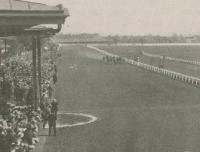
Fayette County's local businesses and organizations contain a wealth of information about local residents.
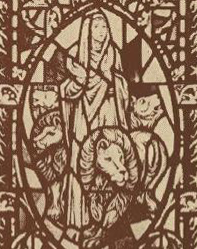
Fayette County churches contain some of the earliest records and information preserved about central Kentucky history. The digital archive contents include church ledgers, minutes, directories, and informational brochures.
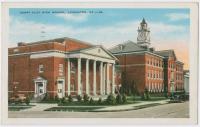
Lexington's school system dates back to the city charter of 1831, and it first school opened in 1834.
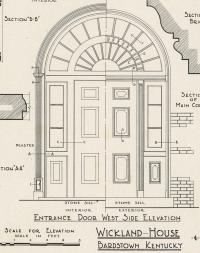
Old Kentucky Architecture is a comprehensive book by Rexford Newcomb that was published in 1940.
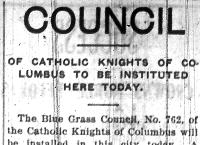
The Knights of Columbus is a fraternal Catholic service organization begun in the 1880s. In 1903, the local Bluegrass Council 762 became the third chapter in Kentucky, and it acquired its 4th degree status in 1920.
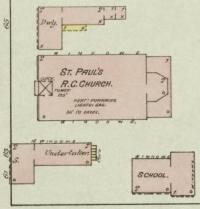
St. Paul the Apostle Roman Catholic Church was formally created in the Covington Diocese in 1868, by Father John Bekkers.
The Around the Town in Lexington, Kentucky magazine pamphlet contains advertisements for local attractions, apartment homes, restaurants, and hotels.
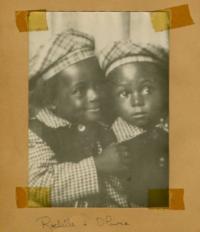
The loose scrapbook pages were given to the library, since the original owner is not known.
In 1768, Lewis Craig and other members of the Spotsylvania Baptist Church were arrested for preaching without a license issued by the Church of England. Their case was later defended by Patrick Henry.
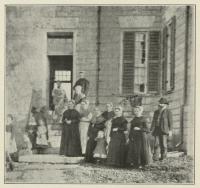
Shaker Village of Pleasant Hill has existed outside of Harrodsburg for over 200 years, and is a popular site to visit today.

The Lexington Musicians' Association is the local chapter of the American Federation of Musicians (Local 554-635) and was chartered in 1910.
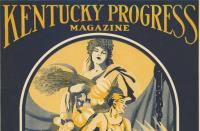
The Kentucky Progress Commission was formed in 1928 in order to draw tourism and business to Kentucky. It was formed by the Kentucky Legislature, and was a 12 person board.
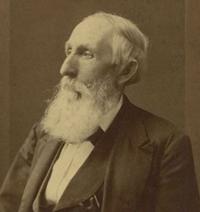
The Lexington Public Library opened a Carnegie library in 1905. It incorporated the collections of the former subscription Lexington Library Company (est.1801) and the former Transylvania Library (est.1795).
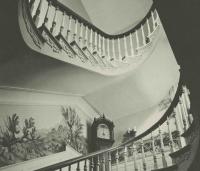
Old Homes of the Blue Grass is a photographic review of historic homes in Kentucky’s Blue Grass region.