








Website Search
Search Website
Displaying results 1526 - 1550 of 3210
The Lexington-Fayette County Health Department had its earliest form almost as long as the city itself has existed, when the newly formed city of Lexington would appoint a local physician to investigate reports of certain diseases for qu

The Take Back Cheapside Collection is a community collection from DeBraun Thomas. The featured postcard of the historic Fayette County Courthouse at was used as a part of the Take Back Cheapside movement in Lexington in 2017.

The Black Community News Collection compiles searchable newspaper articles and ads for local Black community events, schools, social gatherings, church events, obituaries, and wedding announcements in older local newspapers in the librar
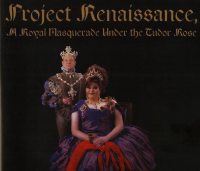
Founded in 1982 by Gigi Galore (Greg Butler) and Blanche Pink (Marlon Austin), the Imperial Court of Kentucky, Inc., is a nonprofit charity that supports the LGBTQ+ community of Kentucky “one dollar at a time” through drag shows, socia

The Kentucky Reporter was published from October 1817-April 1832, by William W. Worsley and Thomas Smith. It is the direct continuation of the The Reporter.

The Kentucky Pioneer Genealogy and Records Magazine published various articles about early Kentucky history as a quarterly publication from 1979-1985, then annually 1986-1988.
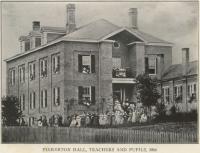
While the focus of content in the digital archive is Fayette County, many other counties are represented. This list is in alphabetical order by county name for non-Fayette County content.
Anderson County
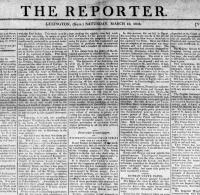
The Reporter was published from March 1808-September 1817, by William W. Worsley. It was a Republican paper (Jeffersonian Democratic Republican - liberal at the time).
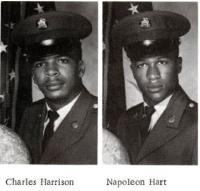
The United States Army Armor School began in 1940 as the Armored Force School and Replacement Center at Fort Knox, Kentucky.

Lena Hart Tobey (1869-1939) was born in Mississippi to Thomas and Susan Watson Hart. In the 1890s, she attended school in Lexington, Kentucky. She married Ellis Tobey in 1896 and died in 1939 in Arkansas.
The Library's digitized collection includes some non-Fayette County directories for businesses, farms and residences.
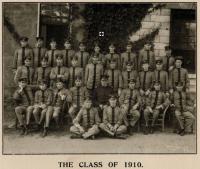
The Kentucky Military Institute was a military preparatory boarding school from 1845 to 1971, chartered by the state legislature in 1847. It had several homes, with the longest in Lyndon, Kentucky, outside of Louisville.

David Franklin “Frank” Milam (1918-2000) was born on January 9, 1918 in Charleston, West Virginia. He married Zelda Bias in September of 1937.
When the United States entered the war, Frank Milam was

The True American was an anti-slavery newspaper started by Cassius Marcellus Clay in June 1845.
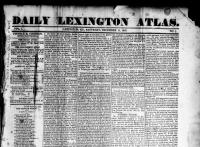
The Daily Lexington Atlas ran from December 11, 1847 through November 20, 1848 and was Lexington’s first daily paper, and the first to publish information from the telegraph lines.
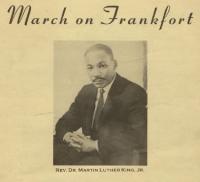
The Brown-Hocker Collection is a community collection of photos and realia from African American events and people in Lexington and Kentucky history.
The objects in the collection are primarily for
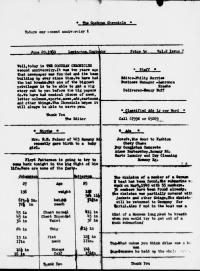
The Cochran Chronicle appears to be a neighborhood leaflet created by two school children, Philip Borries and Laurence Kraehe, living on Cochran Road in the Chevy Chase area of Lexington, KY in 1960.
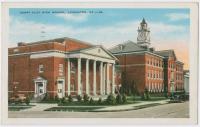
Lexington's school system dates back to the city charter of 1831, and it first school opened in 1834.
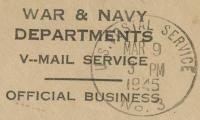
Johnston Albert Young III, was born on May 25, 1924, to Johnston and Lillian Shrout Young. Johnston Young’s father died on November 30, 1938, when he was 14. He served in the US Army from April 1943 to January 1946.
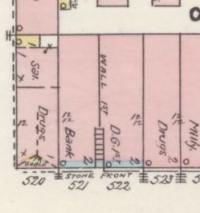
The Bath County Memorial Library was founded in 1949 by the Owingsville Women’s Club, and opened in January, 1950. It expanded into a bookmobile in 1953, and in 1963 moved into the old Farmer’s Bank Building at 24 W. Main St.
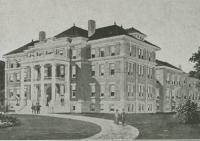
Fayette County's buildings contain a great deal of history about the region and its inhabitants.
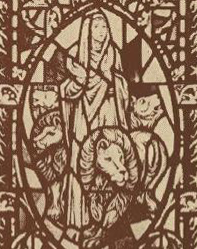
Fayette County churches contain some of the earliest records and information preserved about central Kentucky history. The digital archive contents include church ledgers, minutes, directories, and informational brochures.
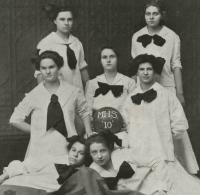
The Morton School Number 1, Lexington’s first public city school in 1834, was originally built on the corner of Walnut (later Martin Luther King Dr.) and Short Street.
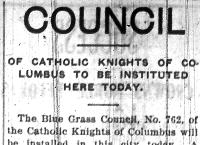
The Knights of Columbus is a fraternal Catholic service organization begun in the 1880s. In 1903, the local Bluegrass Council 762 became the third chapter in Kentucky, and it acquired its 4th degree status in 1920.
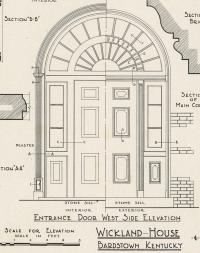
Old Kentucky Architecture is a comprehensive book by Rexford Newcomb that was published in 1940.