








Website Search
Search Website
Displaying results 876 - 900 of 2666
Creator
Thomas Smith
Date
Description
The Kentucky Reporter is the weekly continuation of The Reporter, which changed names in October 1817. It reports on local and national news. 1827 is the only semi-weekly run of this newspaper.
Publisher
Thomas Smith
Rights
The Lexington Public Library believes this item is in the public domain and has no known US Copyright restrictions; however, it may be subject to rights of privacy, publicity, or other restrictions.
Use and reproduction restrictions Though not required, we would greatly appreciate our collection users to credit us as the source. Please use the following statement, "Courtesy of the Lexington Public Library," and provide a link back to the item or collection on our Digital Collections site, www.lexpublib.org/digital-archives. Doing so helps us track how our collections are used and helps justify freely releasing more content in the future. Please contact the library at elibrarian@lexpublib.org for permission questions, collection information, and higher resolution image requests.
CONTENTdm Identifier
2995
Parent Collection
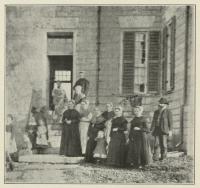
Shaker Village of Pleasant Hill has existed outside of Harrodsburg for over 200 years, and is a popular site to visit today.
Digital Archives - Collection
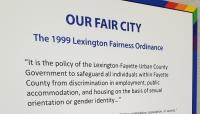
In the summer of 2019, the Lexington History Museum exhibited a 20th anniversary timeline and historical materials exhibit titled, Our Fair City: the 1999 Lexington Fairness Ordinance.
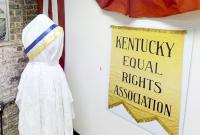
The Lexington History Museum began in 1999, and opened its doors in the Old Courthouse in 2003. Its purpose is to educate Fayette County about its rich history, and preserve pieces of that history for future generations.
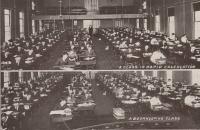
The collection contains non-Fayette County school yearbooks and images, dating from 1878-1968.
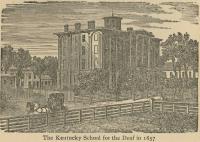
The Kentucky School for the Deaf, located in Danville, was created in 1822. The first class of students were admitted beginning in April 1823. Through a partnership with Centre College, the school's board identified John A
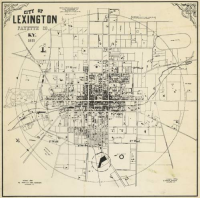
Until 1974, Lexington and Fayette County had two separate governing bodies.
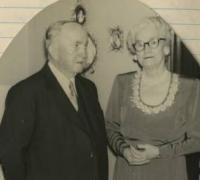
Etta Evans Gilmore was born in Fleming County, Kentucky, on February 4, 1885, to Robert Evans and Matilda Fawns. She married Henry Steele Gilmore, a Bath County physician, around 1906.
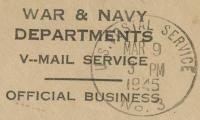
Johnston Albert Young III, was born on May 25, 1924, to Johnston and Lillian Shrout Young. Johnston Young’s father died on November 30, 1938, when he was 14. He served in the US Army from April 1943 to January 1946.
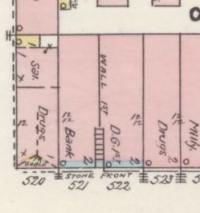
The Bath County Memorial Library was founded in 1949 by the Owingsville Women’s Club, and opened in January, 1950. It expanded into a bookmobile in 1953, and in 1963 moved into the old Farmer’s Bank Building at 24 W. Main St.
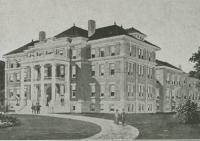
Fayette County's buildings contain a great deal of history about the region and its inhabitants.
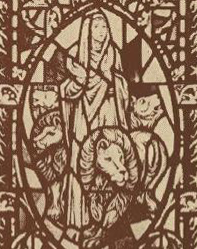
Fayette County churches contain some of the earliest records and information preserved about central Kentucky history. The digital archive contents include church ledgers, minutes, directories, and informational brochures.
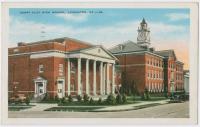
Lexington's school system dates back to the city charter of 1831, and it first school opened in 1834.
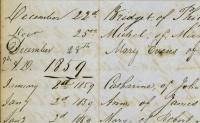
St. Paul Catholic Church is one of the oldest existing churches in Lexington. The records for the parish go back to 1854. The ledgers are part of the church's historical archive, and contain unique records for Lexington's history.
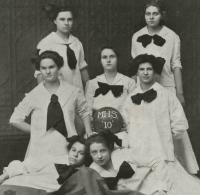
The Morton School Number 1, Lexington’s first public city school in 1834, was originally built on the corner of Walnut (later Martin Luther King Dr.) and Short Street.
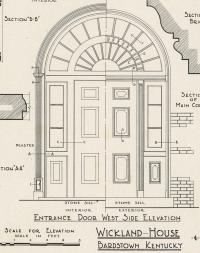
Old Kentucky Architecture is a comprehensive book by Rexford Newcomb that was published in 1940.
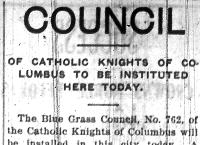
The Knights of Columbus is a fraternal Catholic service organization begun in the 1880s. In 1903, the local Bluegrass Council 762 became the third chapter in Kentucky, and it acquired its 4th degree status in 1920.
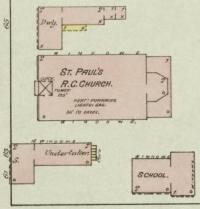
St. Paul the Apostle Roman Catholic Church was formally created in the Covington Diocese in 1868, by Father John Bekkers.
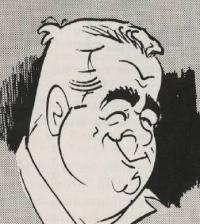
The Around the Town in Lexington, Kentucky magazine pamphlet contains advertisements for local attractions, apartment homes, restaurants, and hotels.
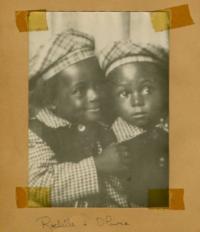
The loose scrapbook pages were given to the library, since the original owner is not known.
In 1768, Lewis Craig and other members of the Spotsylvania Baptist Church were arrested for preaching without a license issued by the Church of England. Their case was later defended by Patrick Henry.
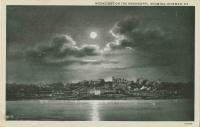
The Knowles Postcard Collection contains images of notable Kentucky locations, such as Ashland, Keeneland, and Mammoth Cave, as well as county courthouses, farms, schools, and many others.
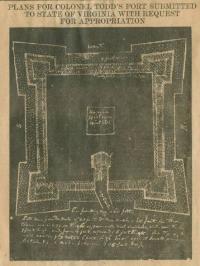
In 1917, the Woman’s Club of Central Kentucky hosted a series of speakers giving historical sketches on people and places of local interest.
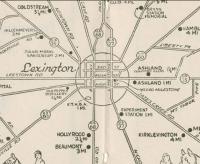
The Kentucky Room's collections contain Lexington's residential directories going back over 200 years, and are some of the most useful resources for researchers looking for family information, neighborhood histories, and house histories.
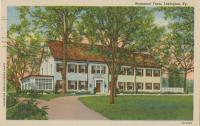
The Kentucky Postcard collection contains images of well-known sites in Central Kentucky, such as Keeneland, Transylvania University, Ashland, and many others.