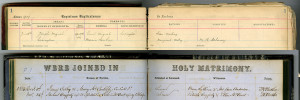







Etta Evans Gilmore was born in Fleming County, Kentucky, on February 4, 1885, to Robert Evans and Matilda Fawns. She married Henry Steele Gilmore, a Bath County physician, around 1906. Their son Robert was born in 1906 and daughter…
Instantly borrow eBooks and audiobooks free with your library card — anytime, anywhere. Use the Libby app to create wish lists, get notified of new releases, and send eBooks straight to your tablet or Kindle.
Hit record in the new podcast studio — now open at the Northside Digital Studio! Whether you're just starting or leveling up, the space is ready for your voice.
Everyone deserves a place to discover something new. The Lexington Public Library champions free and open access to information, offering a safe and welcoming space where neighbors can learn, create, and connect. Your support empowers a community engaged in lifelong discovery.
Whether you’re into mysteries, memoirs, cookbooks, classics, or something in between, we’ve got a club for you. Choose from a variety of book clubs for different ages and interests or join us for a readers and writers event.
Schedule a one-on-one consultation to learn library skills, get help with research and job searches, have a test proctored by one of our librarians, and more.
We stand for free and open access to information. That starts with removing unnecessary barriers to our educational resources and technology. The Lexington Public Library no longer charges fines or fees for late, lost, or damaged material.
Our commitment to listening, learning and changing is ongoing and our work is never complete. We affirm that we achieve more together because of our differences, not despite them. When all voices are heard, we are stronger.
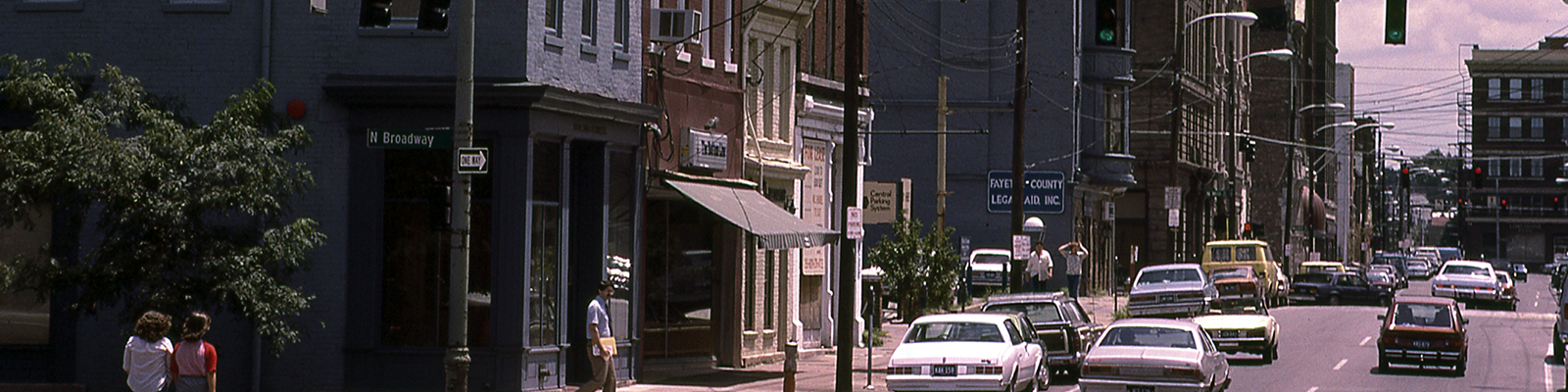
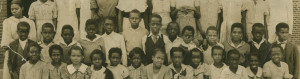
Etta Evans Gilmore was born in Fleming County, Kentucky, on February 4, 1885, to Robert Evans and Matilda Fawns. She married Henry Steele Gilmore, a Bath County physician, around 1906. Their son Robert was born in 1906 and daughter…
This collection consists of Black community news published under the headline “Colored Churches,” “In Colored Circles,” or “Colored Notes”; and other articles of social interest, including marriages, public events, and obituaries.
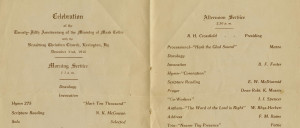
Program details the agenda of the December 31, 1916, service commemorating the 25th anniversary of Rev. Mark Collis's affiliation with Broadway Christian Church.
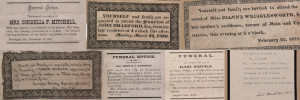
Compiled by Cyrus Parker Jones, a man formerly enslaved by the Parker family, these funeral notices cover 667 funerals of individuals in Lexington, including seven free blacks. The funeral notices cover the years 1806-1886. Jones…
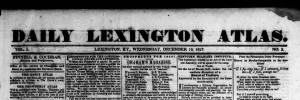
The Daily Lexington Atlas ran from late 1847 through early 1849 and was Lexington’s first daily paper, and the first to publish information from the telegraph lines. It is described by William Perrin in his 1882 History of Fayette…
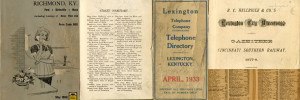
The 1906-07 Lexington cross directory contains residential and business information for the city, arranged both alphabetically and by street, with a business listing by category. It also contains city officials and departments, and…
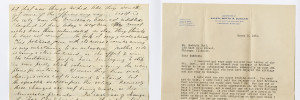
This collection of letters to and from portrait artist Sudduth Goff (1887-1965) is part of the library's Duncan-Goff scrapbook collection.
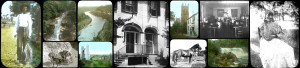
The Elmer L. Foote Collection is a group of 190 lantern slides. They were created by Elmer L. Foote, a Cincinnati photographer and library staff member whose pictures appeared in the Cincinnati Commercial Tribune.
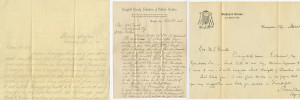
Letters to and from Father William T. Punch (1874-1933). Father Punch was instrumental in building the 3rd St. Peter Catholic Church on Barr Street in Lexington, KY.
The city report covers the outline of a citizen participation work plan and its connection with neighborhood groups, as well as the results of those meetings and community concerns that took place throughout 1969. It contains…
This half of the record book contains burial records for St. Paul Catholic Church parishioners.
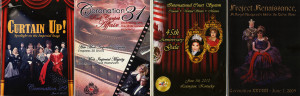
Program features the activities and accomplishments of the previous year’s Empress and Emperor while providing the layout of the current year’s coronation proceedings. Features advertisements for local businesses and photographs of the…
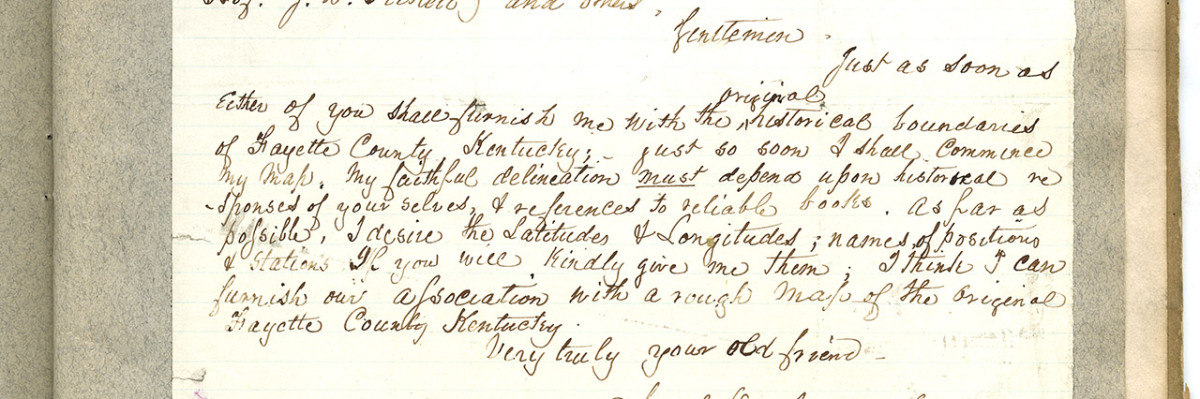
This letter collection was collected by Judge Kenneth Lyons. The earliest date of the letters is 1862, from Bourbon and Nicholas Counties, Kentucky. Some letters are fragments.
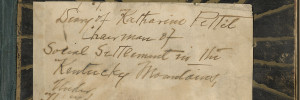
The diary (ca. 1899) of Katherine Pettit, details her settlement work for the Kentucky Confederation of Women's Clubs, made yearly trips to Hazard during this period and was a central figure in establishing the Hindman (Kentucky)…
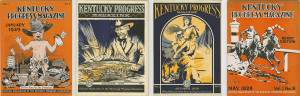
This issue contains information about Kentucky highways, colleges, and agriculture. It also features articles on Bardstown and the song “My Old Kentucky Home” by Stephen Collins Foster.
The title recounts the history of the various kinds of entertainment in early Lexington, including names of theaters, actors, producers, and plays.
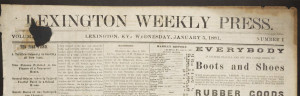
The Lexington Weekly Press was published every Wednesday in Lexington, Kentucky, and contained local, state, and foreign news. The paper focused on Central Kentucky’s “agriculture, manufactures and fine stock”, as well as literary and…
The Kentucky Leader was published from 1888 until the name changed in 1895 to the Daily Leader. They focused on local and national news. The Daily Leader was published from 1895-1901 until the name was changed to the Lexington Leader.…
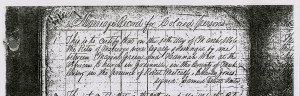
Scans of the Black Marriage records from the Courthouse in Greenville, Kentucky.
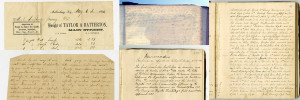
This is a handwritten series of lectures detailing Samuel D. McCullough's memories of his childhood and life in Lexington, Kentucky, accompanied by letters and a photograph of his house.
The Eastern Kentucky Review contains articles about Eastern Kentucky State Teachers College. This particular issue contains photos of buildings, graduating seniors, students, clubs, and activities, and includes photos and information…
The Daily Argonaut began in 1895 and seems to have ceased publication in 1899. This collection includes scattered issues from 1895, 1896, 1897 and 1898.
The Independent Gazetteer was founded and printed by James Charless in 1803, with ads appearing in the Kentucky Gazette about its upcoming publication. The first issue was printed March 29, 1803. The paper was later sold to Robert Kay…
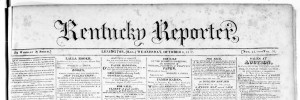
The Kentucky Reporter is the weekly continuation of The Reporter, which changed names in October 1817. It reports on local and national news. 1827 is the only semi-weekly run of this newspaper.
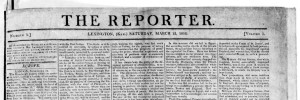
The Reporter was a weekly Republican paper, occasionally semi-weekly when Congress was in session. Continued publication throughout the War of 1812.
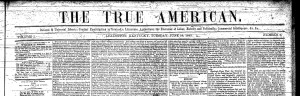
The True American was an anti-slavery newspaper started by Cassius Marcellus Clay in June 1845. He ran the paper in Lexington until August of 1845, when he published an article deemed so incendiary that at court injunction was issued…
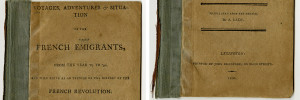
This work contains information about French Emigrants to America over the years 1789-1799, and provides a history of the French Revolution. The work was originally in French, and was translated into English by an anonymous translator…
Everyone deserves a place to discover something new. The Lexington Public Library stands for free and open access to information. We’re a safe, welcoming space for neighbors to come together — opening the door so all Lexingtonians can find what they’re looking for.
Friends of the Lexington Public Library provides financial, advocacy and volunteer support to the Library. Shop at the Friends Book Cellar in the Central Library for a great selection of used books, magazines, CDs, DVDs, audiobooks, and vinyl records, all at discounted prices.
Transfer heat transfer vinyl or sublimation paper designs on t-shirts, mugs, bags, and other heat-resistant and sublimation ready materials. A mug press, large and small handheld presses, automated heat press, sublimation printer, and Cricut machines are available at the Marksbury Family Branch Makerspace. A small handheld press, automated heat press, and Cricut machines are available at the Eastside Makerspace.
Please supply your own personal items to transfer on to. Sublimation paper and heat transfer vinyl are available for purchase, or you can use your own free of charge. Speak with a staff member before use if you are bringing your own materials.
Visit the following learning spaces to get started.
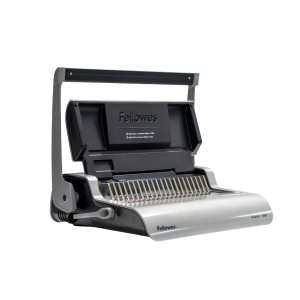
Use this machine to bind paper booklets in a variety of sizes. Binding combs are available for purchase, or you can use your own free of charge. Speak with a staff member before use if you are using your own combs.
Visit the following learning spaces to get started.
Use this router for small scale wood milling with a maximum size of 8x8x3 inches. Please supply your own personal items for milling. Speak with an Eastside Makerspace staff member to schedule an appointment to use the CNC router.
Visit the following learning spaces to get started.
With your free library card, gain access to a diverse collection of print books, ebooks, audiobooks, online classes and databases, and more. You can apply for a traditional, wallet-sized card and key chain tag or a digital library card to add to your smartphone’s digital wallet (iOS and Android compatible).
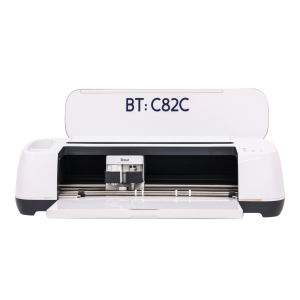
Cricut machines can cut 12x24-inch vinyl, fabric, and paper products. 12x12-inch transfer tape, permanent vinyl, and heat transfer vinyl are available for purchase, or you can use your own materials free of charge. Speak with a staff member before use if you are bringing your own materials.
Visit the following learning spaces to get started.
Fire small pieces made of precious metal clay. Machine can hold items up to 2.5x1.5”. Please supply your own personal materials for firing. Speak with an Eastside Makerspace staff member to schedule an appointment to use the tabletop kiln.
Visit the following learning spaces to get started.
Lexington, Kentucky (April 12, 2023) – The Lexington Public Library will be Fine Free for all materials, effective immediately, following a vote at today’s regularly scheduled monthly board meeting. Lexington Public Library customers will no longer incur fines for late, damaged, or lost library materials. Additionally, the Library has forgiven all current, outstanding fines
The Lexington Public Library receives most of its operating funds from an Ad Valorem property tax. By State law, the Library receives five cents for every $100 of assessed property value in Lexington and Fayette County.
You can request a "Bag of Books" to access our materials when you're unable to browse in person. Complete this form, and we'll pull up to 10 items that match your specified interests. You can help us locate more items by keeping your requests general.
The Lexington Public Library encourages visits by children, and wishes to make these visits both memorable and enjoyable. The Library recognizes that children have special needs. This policy emphasizes the fact that ultimate responsibility for children’s health, safety, and behavior in the Library’s environment resides with the parent or guardian.

Lexington Public Library is proud to host the 2026 Kentucky History and Genealogy Conference. This conference brings together historians, genealogists, researchers, and enthusiasts to explore the rich history and genealogical heritage of Kentucky.
Read the latest news from Lexington Public Library.
By using a Library-owned public computer, or by connecting your personally-owned computer or device to the LPL network, you agree to adhere to this policy. Violation of any part of this policy may result in termination of the customer’s session, with the possible loss of computer or library privileges for flagrant or repeated violation(s) at the Library's sole and exclusive discretion. Illegal acts may also be subject to prosecution by local, state, and/or federal authorities.
The Lexington Public Library allows access to its records, pursuant to KRS 61.870 to 61.884.
Description coming soon.
Etta Evans Gilmore was born in Fleming County, Kentucky, on February 4, 1885, to Robert Evans and Matilda Fawns. She married Henry Steele Gilmore, a Bath County physician, around 1906. Their son Robert was born in 1906 and daughter…
This collection consists of Black community news published under the headline “Colored Churches,” “In Colored Circles,” or “Colored Notes”; and other articles of social interest, including marriages, public events, and obituaries.
Program details the agenda of the December 31, 1916, service commemorating the 25th anniversary of Rev. Mark Collis's affiliation with Broadway Christian Church.
Compiled by Cyrus Parker Jones, a man formerly enslaved by the Parker family, these funeral notices cover 667 funerals of individuals in Lexington, including seven free blacks. The funeral notices cover the years 1806-1886. Jones…
The Daily Lexington Atlas ran from late 1847 through early 1849 and was Lexington’s first daily paper, and the first to publish information from the telegraph lines. It is described by William Perrin in his 1882 History of Fayette…
The 1906-07 Lexington cross directory contains residential and business information for the city, arranged both alphabetically and by street, with a business listing by category. It also contains city officials and departments, and…
This collection of letters to and from portrait artist Sudduth Goff (1887-1965) is part of the library's Duncan-Goff scrapbook collection.
The Elmer L. Foote Collection is a group of 190 lantern slides. They were created by Elmer L. Foote, a Cincinnati photographer and library staff member whose pictures appeared in the Cincinnati Commercial Tribune.
Letters to and from Father William T. Punch (1874-1933). Father Punch was instrumental in building the 3rd St. Peter Catholic Church on Barr Street in Lexington, KY.
The city report covers the outline of a citizen participation work plan and its connection with neighborhood groups, as well as the results of those meetings and community concerns that took place throughout 1969. It contains…
This half of the record book contains burial records for St. Paul Catholic Church parishioners.
Program features the activities and accomplishments of the previous year’s Empress and Emperor while providing the layout of the current year’s coronation proceedings. Features advertisements for local businesses and photographs of the…
This letter collection was collected by Judge Kenneth Lyons. The earliest date of the letters is 1862, from Bourbon and Nicholas Counties, Kentucky. Some letters are fragments.
The diary (ca. 1899) of Katherine Pettit, details her settlement work for the Kentucky Confederation of Women's Clubs, made yearly trips to Hazard during this period and was a central figure in establishing the Hindman (Kentucky)…
This issue contains information about Kentucky highways, colleges, and agriculture. It also features articles on Bardstown and the song “My Old Kentucky Home” by Stephen Collins Foster.
The title recounts the history of the various kinds of entertainment in early Lexington, including names of theaters, actors, producers, and plays.
The Lexington Weekly Press was published every Wednesday in Lexington, Kentucky, and contained local, state, and foreign news. The paper focused on Central Kentucky’s “agriculture, manufactures and fine stock”, as well as literary and…
The Kentucky Leader was published from 1888 until the name changed in 1895 to the Daily Leader. They focused on local and national news. The Daily Leader was published from 1895-1901 until the name was changed to the Lexington Leader.…
Scans of the Black Marriage records from the Courthouse in Greenville, Kentucky.
This is a handwritten series of lectures detailing Samuel D. McCullough's memories of his childhood and life in Lexington, Kentucky, accompanied by letters and a photograph of his house.
The Eastern Kentucky Review contains articles about Eastern Kentucky State Teachers College. This particular issue contains photos of buildings, graduating seniors, students, clubs, and activities, and includes photos and information…
The Daily Argonaut began in 1895 and seems to have ceased publication in 1899. This collection includes scattered issues from 1895, 1896, 1897 and 1898.
The Independent Gazetteer was founded and printed by James Charless in 1803, with ads appearing in the Kentucky Gazette about its upcoming publication. The first issue was printed March 29, 1803. The paper was later sold to Robert Kay…
The Kentucky Reporter is the weekly continuation of The Reporter, which changed names in October 1817. It reports on local and national news. 1827 is the only semi-weekly run of this newspaper.
The Reporter was a weekly Republican paper, occasionally semi-weekly when Congress was in session. Continued publication throughout the War of 1812.
The True American was an anti-slavery newspaper started by Cassius Marcellus Clay in June 1845. He ran the paper in Lexington until August of 1845, when he published an article deemed so incendiary that at court injunction was issued…
This work contains information about French Emigrants to America over the years 1789-1799, and provides a history of the French Revolution. The work was originally in French, and was translated into English by an anonymous translator…
Etta Evans Gilmore was born in Fleming County, Kentucky, on February 4, 1885, to Robert Evans and Matilda Fawns. She married Henry Steele Gilmore, a Bath County physician, around 1906. Their son Robert was born in 1906 and daughter…
This collection consists of Black community news published under the headline “Colored Churches,” “In Colored Circles,” or “Colored Notes”; and other articles of social interest, including marriages, public events, and obituaries.
Program details the agenda of the December 31, 1916, service commemorating the 25th anniversary of Rev. Mark Collis's affiliation with Broadway Christian Church.
Compiled by Cyrus Parker Jones, a man formerly enslaved by the Parker family, these funeral notices cover 667 funerals of individuals in Lexington, including seven free blacks. The funeral notices cover the years 1806-1886. Jones…
The Daily Lexington Atlas ran from late 1847 through early 1849 and was Lexington’s first daily paper, and the first to publish information from the telegraph lines. It is described by William Perrin in his 1882 History of Fayette…
The 1906-07 Lexington cross directory contains residential and business information for the city, arranged both alphabetically and by street, with a business listing by category. It also contains city officials and departments, and…
This collection of letters to and from portrait artist Sudduth Goff (1887-1965) is part of the library's Duncan-Goff scrapbook collection.
The Elmer L. Foote Collection is a group of 190 lantern slides. They were created by Elmer L. Foote, a Cincinnati photographer and library staff member whose pictures appeared in the Cincinnati Commercial Tribune.
Letters to and from Father William T. Punch (1874-1933). Father Punch was instrumental in building the 3rd St. Peter Catholic Church on Barr Street in Lexington, KY.
The city report covers the outline of a citizen participation work plan and its connection with neighborhood groups, as well as the results of those meetings and community concerns that took place throughout 1969. It contains…
This half of the record book contains burial records for St. Paul Catholic Church parishioners.
Program features the activities and accomplishments of the previous year’s Empress and Emperor while providing the layout of the current year’s coronation proceedings. Features advertisements for local businesses and photographs of the…
This letter collection was collected by Judge Kenneth Lyons. The earliest date of the letters is 1862, from Bourbon and Nicholas Counties, Kentucky. Some letters are fragments.
The diary (ca. 1899) of Katherine Pettit, details her settlement work for the Kentucky Confederation of Women's Clubs, made yearly trips to Hazard during this period and was a central figure in establishing the Hindman (Kentucky)…
This issue contains information about Kentucky highways, colleges, and agriculture. It also features articles on Bardstown and the song “My Old Kentucky Home” by Stephen Collins Foster.
The title recounts the history of the various kinds of entertainment in early Lexington, including names of theaters, actors, producers, and plays.
The Lexington Weekly Press was published every Wednesday in Lexington, Kentucky, and contained local, state, and foreign news. The paper focused on Central Kentucky’s “agriculture, manufactures and fine stock”, as well as literary and…
The Kentucky Leader was published from 1888 until the name changed in 1895 to the Daily Leader. They focused on local and national news. The Daily Leader was published from 1895-1901 until the name was changed to the Lexington Leader.…
Scans of the Black Marriage records from the Courthouse in Greenville, Kentucky.
This is a handwritten series of lectures detailing Samuel D. McCullough's memories of his childhood and life in Lexington, Kentucky, accompanied by letters and a photograph of his house.
The Eastern Kentucky Review contains articles about Eastern Kentucky State Teachers College. This particular issue contains photos of buildings, graduating seniors, students, clubs, and activities, and includes photos and information…
The Daily Argonaut began in 1895 and seems to have ceased publication in 1899. This collection includes scattered issues from 1895, 1896, 1897 and 1898.
The Independent Gazetteer was founded and printed by James Charless in 1803, with ads appearing in the Kentucky Gazette about its upcoming publication. The first issue was printed March 29, 1803. The paper was later sold to Robert Kay…
The Kentucky Reporter is the weekly continuation of The Reporter, which changed names in October 1817. It reports on local and national news. 1827 is the only semi-weekly run of this newspaper.
The Reporter was a weekly Republican paper, occasionally semi-weekly when Congress was in session. Continued publication throughout the War of 1812.
The True American was an anti-slavery newspaper started by Cassius Marcellus Clay in June 1845. He ran the paper in Lexington until August of 1845, when he published an article deemed so incendiary that at court injunction was issued…
This work contains information about French Emigrants to America over the years 1789-1799, and provides a history of the French Revolution. The work was originally in French, and was translated into English by an anonymous translator…
Etta Evans Gilmore was born in Fleming County, Kentucky, on February 4, 1885, to Robert Evans and Matilda Fawns. She married Henry Steele Gilmore, a Bath County physician, around 1906. Their son Robert was born in 1906 and daughter…
This collection consists of Black community news published under the headline “Colored Churches,” “In Colored Circles,” or “Colored Notes”; and other articles of social interest, including marriages, public events, and obituaries.
Program details the agenda of the December 31, 1916, service commemorating the 25th anniversary of Rev. Mark Collis's affiliation with Broadway Christian Church.
Compiled by Cyrus Parker Jones, a man formerly enslaved by the Parker family, these funeral notices cover 667 funerals of individuals in Lexington, including seven free blacks. The funeral notices cover the years 1806-1886. Jones…
The Daily Lexington Atlas ran from late 1847 through early 1849 and was Lexington’s first daily paper, and the first to publish information from the telegraph lines. It is described by William Perrin in his 1882 History of Fayette…
The 1906-07 Lexington cross directory contains residential and business information for the city, arranged both alphabetically and by street, with a business listing by category. It also contains city officials and departments, and…
This collection of letters to and from portrait artist Sudduth Goff (1887-1965) is part of the library's Duncan-Goff scrapbook collection.
The Elmer L. Foote Collection is a group of 190 lantern slides. They were created by Elmer L. Foote, a Cincinnati photographer and library staff member whose pictures appeared in the Cincinnati Commercial Tribune.
Letters to and from Father William T. Punch (1874-1933). Father Punch was instrumental in building the 3rd St. Peter Catholic Church on Barr Street in Lexington, KY.
The city report covers the outline of a citizen participation work plan and its connection with neighborhood groups, as well as the results of those meetings and community concerns that took place throughout 1969. It contains…
This half of the record book contains burial records for St. Paul Catholic Church parishioners.
Program features the activities and accomplishments of the previous year’s Empress and Emperor while providing the layout of the current year’s coronation proceedings. Features advertisements for local businesses and photographs of the…
This letter collection was collected by Judge Kenneth Lyons. The earliest date of the letters is 1862, from Bourbon and Nicholas Counties, Kentucky. Some letters are fragments.
The diary (ca. 1899) of Katherine Pettit, details her settlement work for the Kentucky Confederation of Women's Clubs, made yearly trips to Hazard during this period and was a central figure in establishing the Hindman (Kentucky)…
This issue contains information about Kentucky highways, colleges, and agriculture. It also features articles on Bardstown and the song “My Old Kentucky Home” by Stephen Collins Foster.
The title recounts the history of the various kinds of entertainment in early Lexington, including names of theaters, actors, producers, and plays.
The Lexington Weekly Press was published every Wednesday in Lexington, Kentucky, and contained local, state, and foreign news. The paper focused on Central Kentucky’s “agriculture, manufactures and fine stock”, as well as literary and…
The Kentucky Leader was published from 1888 until the name changed in 1895 to the Daily Leader. They focused on local and national news. The Daily Leader was published from 1895-1901 until the name was changed to the Lexington Leader.…
Scans of the Black Marriage records from the Courthouse in Greenville, Kentucky.
This is a handwritten series of lectures detailing Samuel D. McCullough's memories of his childhood and life in Lexington, Kentucky, accompanied by letters and a photograph of his house.
The Eastern Kentucky Review contains articles about Eastern Kentucky State Teachers College. This particular issue contains photos of buildings, graduating seniors, students, clubs, and activities, and includes photos and information…
The Daily Argonaut began in 1895 and seems to have ceased publication in 1899. This collection includes scattered issues from 1895, 1896, 1897 and 1898.
The Independent Gazetteer was founded and printed by James Charless in 1803, with ads appearing in the Kentucky Gazette about its upcoming publication. The first issue was printed March 29, 1803. The paper was later sold to Robert Kay…
The Kentucky Reporter is the weekly continuation of The Reporter, which changed names in October 1817. It reports on local and national news. 1827 is the only semi-weekly run of this newspaper.
The Reporter was a weekly Republican paper, occasionally semi-weekly when Congress was in session. Continued publication throughout the War of 1812.
The True American was an anti-slavery newspaper started by Cassius Marcellus Clay in June 1845. He ran the paper in Lexington until August of 1845, when he published an article deemed so incendiary that at court injunction was issued…
This work contains information about French Emigrants to America over the years 1789-1799, and provides a history of the French Revolution. The work was originally in French, and was translated into English by an anonymous translator…
Etta Evans Gilmore was born in Fleming County, Kentucky, on February 4, 1885, to Robert Evans and Matilda Fawns. She married Henry Steele Gilmore, a Bath County physician, around 1906. Their son Robert was born in 1906 and daughter…
This collection consists of Black community news published under the headline “Colored Churches,” “In Colored Circles,” or “Colored Notes”; and other articles of social interest, including marriages, public events, and obituaries.
Program details the agenda of the December 31, 1916, service commemorating the 25th anniversary of Rev. Mark Collis's affiliation with Broadway Christian Church.
Compiled by Cyrus Parker Jones, a man formerly enslaved by the Parker family, these funeral notices cover 667 funerals of individuals in Lexington, including seven free blacks. The funeral notices cover the years 1806-1886. Jones…
The Daily Lexington Atlas ran from late 1847 through early 1849 and was Lexington’s first daily paper, and the first to publish information from the telegraph lines. It is described by William Perrin in his 1882 History of Fayette…
The 1906-07 Lexington cross directory contains residential and business information for the city, arranged both alphabetically and by street, with a business listing by category. It also contains city officials and departments, and…
This collection of letters to and from portrait artist Sudduth Goff (1887-1965) is part of the library's Duncan-Goff scrapbook collection.
The Elmer L. Foote Collection is a group of 190 lantern slides. They were created by Elmer L. Foote, a Cincinnati photographer and library staff member whose pictures appeared in the Cincinnati Commercial Tribune.
Letters to and from Father William T. Punch (1874-1933). Father Punch was instrumental in building the 3rd St. Peter Catholic Church on Barr Street in Lexington, KY.
The city report covers the outline of a citizen participation work plan and its connection with neighborhood groups, as well as the results of those meetings and community concerns that took place throughout 1969. It contains…
This half of the record book contains burial records for St. Paul Catholic Church parishioners.
Program features the activities and accomplishments of the previous year’s Empress and Emperor while providing the layout of the current year’s coronation proceedings. Features advertisements for local businesses and photographs of the…
This letter collection was collected by Judge Kenneth Lyons. The earliest date of the letters is 1862, from Bourbon and Nicholas Counties, Kentucky. Some letters are fragments.
The diary (ca. 1899) of Katherine Pettit, details her settlement work for the Kentucky Confederation of Women's Clubs, made yearly trips to Hazard during this period and was a central figure in establishing the Hindman (Kentucky)…
This issue contains information about Kentucky highways, colleges, and agriculture. It also features articles on Bardstown and the song “My Old Kentucky Home” by Stephen Collins Foster.
The title recounts the history of the various kinds of entertainment in early Lexington, including names of theaters, actors, producers, and plays.
The Lexington Weekly Press was published every Wednesday in Lexington, Kentucky, and contained local, state, and foreign news. The paper focused on Central Kentucky’s “agriculture, manufactures and fine stock”, as well as literary and…
The Kentucky Leader was published from 1888 until the name changed in 1895 to the Daily Leader. They focused on local and national news. The Daily Leader was published from 1895-1901 until the name was changed to the Lexington Leader.…
Scans of the Black Marriage records from the Courthouse in Greenville, Kentucky.
This is a handwritten series of lectures detailing Samuel D. McCullough's memories of his childhood and life in Lexington, Kentucky, accompanied by letters and a photograph of his house.
The Eastern Kentucky Review contains articles about Eastern Kentucky State Teachers College. This particular issue contains photos of buildings, graduating seniors, students, clubs, and activities, and includes photos and information…
The Daily Argonaut began in 1895 and seems to have ceased publication in 1899. This collection includes scattered issues from 1895, 1896, 1897 and 1898.
The Independent Gazetteer was founded and printed by James Charless in 1803, with ads appearing in the Kentucky Gazette about its upcoming publication. The first issue was printed March 29, 1803. The paper was later sold to Robert Kay…
The Kentucky Reporter is the weekly continuation of The Reporter, which changed names in October 1817. It reports on local and national news. 1827 is the only semi-weekly run of this newspaper.
The Reporter was a weekly Republican paper, occasionally semi-weekly when Congress was in session. Continued publication throughout the War of 1812.
The True American was an anti-slavery newspaper started by Cassius Marcellus Clay in June 1845. He ran the paper in Lexington until August of 1845, when he published an article deemed so incendiary that at court injunction was issued…
This work contains information about French Emigrants to America over the years 1789-1799, and provides a history of the French Revolution. The work was originally in French, and was translated into English by an anonymous translator…